


How to Find Apartments for Rent in Chicago IL (May 2026 Quick Answer)
Finding apartments for rent in Chicago IL is faster when you know exactly where to look and what to filter for. Here's a quick snapshot for renters searching right now:
Quick Answer: How to Find Chicago Apartments for Rent
- Search the major platforms — Apartments.com (19,645 listings), Zillow (16,824 listings), and Redfin (5,709 listings) all have active Chicago inventory as of May 2026.
- Pick your neighborhood first — Lincoln Park, Lake View, Logan Square, West Loop, and River North are among the most searched areas.
- Filter by what matters to you — bedrooms, move-in date, pet policy, parking, and in-unit laundry narrow results fast.
- Verify fees and lease terms directly — application fees, security deposits, and move-in costs vary widely by building.
- Save your search — set up email alerts so new listings reach you the moment they hit the market.
Chicago's rental market is large and moves quickly. With tens of thousands of active listings across multiple platforms, it's easy to feel overwhelmed before you've even booked a tour.
The good news? Most renters waste time because they search too broadly, not because good apartments don't exist.
The three tricks below cut through the noise — whether you're looking for a sleek high-rise in the West Loop, a lakefront unit in Edgewater, or a vintage two-bedroom in Lake View.
Trick #1: Use smart filters first when searching apartments for rent Chicago IL
The fastest way to clean up a messy search is to use filters before scrolling. Not after. Not "just to browse a little." Before.
When we search apartments for rent chicago il, the best filter stack usually starts with:
- unit type
- bedroom count
- move-in date
- pet policy
- laundry
- parking
- air conditioning
- elevator access
- gym or fitness center
- pool, if that is a must-have
- commute or transit-friendly location
This matters because Chicago inventory is huge, but not every listing is equally useful. Some are duplicates, some are already spoken for, and some look perfect until you realize they have no laundry, no parking, and a move-in date that does not work.
Start with price bands, unit type, and move-in timing for apartments for rent Chicago IL
Even without focusing on exact pricing, unit type tells you a lot about the search pool.
In May 2026, market-wide data shows clear differences between studios, one-bedrooms, and two-bedrooms. Research also shows the average one-bedroom rent in Chicago is $2,009 per month, up 4% year over year. Studios generally start lower than one-bedrooms, while two-bedrooms usually jump noticeably higher, especially in downtown high-rises or newer full-amenity buildings.
A smarter search flow looks like this:
- Choose studio, one-bedroom, or two-bedroom first.
- Set your preferred move-in window.
- Exclude listings with vague availability.
- Save only the units that match your real timeline.
Chicago also has seasonal demand swings. Late spring and summer usually bring more renters into the market, which means more activity, more competition, and more listings changing status quickly. That is one more reason move-in date should be a first-pass filter, not an afterthought.
For a broader overview, our Apartments for Rent in Chicago Guide and Chicago Apartment Rental Market break down what renters should watch in the current market.
Filter for the amenities that matter most in Chicago
In Chicago, amenities are not just "nice extras." They can completely change your daily routine.
The most commonly searched features include:
- in-unit washer and dryer
- air conditioning
- fitness center
- parking garage
- elevator
- doorman or front desk
- package lockers
- rooftop deck
- pet-friendly policies
- on-site maintenance
If you work downtown, parking may matter less than CTA access. If you drive every day, covered parking can quickly move from "nice to have" to "where has this been all my life?"
If amenity-focused searching is high on your list, these pages help narrow priorities:
- Apartments with Gym Facilities
- Chicago Apartments with Parking Garage
- Pet Friendly Apartments Chicago Guide
- Chicago Apartments with Gym
Know which amenities are common versus rare
This is where renters can save a lot of time.
Some amenities are common enough that filtering for them makes sense right away. Others are rare enough that they should be treated like bonus points, not baseline expectations.
Research from active listing pages shows:
- swimming pools appear in only about 4% of Chicago apartment listings
- business centers also show up in about 4%
- pet washing stations appear in only about 2%
That means if a pool is a dealbreaker, expect a smaller shortlist. Same story for pet wash stations and some specialty amenity packages.
More common features tend to include:
- laundry access
- air conditioning
- pet-friendly options
- parking in many larger buildings
- fitness rooms in newer developments
Premium or less common features often include:
- indoor pool
- year-round heated rooftop pool
- concierge service
- private terraces
- indoor sports courts
- heated garage or valet-style parking
- private outdoor access
- private beach access in select lakefront properties, such as Beachside Apartments – Apartments for Rent in Edgewater | Chicago Rentals

Trick #2: Compare neighborhoods before comparing buildings
Chicago renters often jump straight to buildings. We get it. Shiny photos are persuasive.
But neighborhood fit usually matters more than the lobby chandelier.
Two apartments with similar layouts can feel completely different depending on commute, walkability, nightlife, grocery access, lakefront proximity, and building style around them.
Best Chicago neighborhoods renters search most often
Based on the research, these neighborhoods come up again and again in apartment searches:
- Lincoln Park
- Lake View
- Logan Square
- West Loop
- River North
- Streeterville
- Edgewater
- The Loop
Each of these attracts renters for a different reason.
- Lincoln Park is known for classic Chicago charm, parks, and a mix of vintage and updated housing.
- Lake View draws renters who want lake access, neighborhood energy, and strong transit options.
- Logan Square appeals to renters looking for a mix of character, restaurants, and a lively local feel.
- West Loop is a top choice for newer buildings, modern finishes, and quick downtown access.
- River North offers high-rise living, dining, and central convenience.
- Streeterville is popular for renters who want to be near the lake, downtown offices, and major institutions.
- Edgewater stands out for lakefront living and a more residential feel.
- The Loop puts renters close to transit hubs and the business core.
What makes each neighborhood desirable
A neighborhood search works best when we match lifestyle to location.
Look for these patterns:
- CTA access if commuting is non-negotiable
- restaurant density if dining out is part of weekly life
- lakefront trails and parks if outdoor access matters
- university proximity for renters who want specific academic-area access
- high-rise inventory if you want elevators, doormen, and full amenity packages
- vintage walk-ups if character matters more than ultra-new finishes
In practice, that means West Loop and River North often attract renters looking for modern towers and newer amenity sets. Lincoln Park, Lake View, and Edgewater can offer a broader mix of vintage and updated stock. Logan Square often appeals to renters who want neighborhood personality with transit access.
West Loop and downtown options for renters who want newer buildings
If your search leans toward newer buildings, downtown and West Loop neighborhoods deserve early attention.
West Loop and Fulton Market are especially popular for renters who want:
- modern finishes
- rooftop lounges
- fitness centers
- package rooms
- co-working or resident lounge spaces
- garage parking
- quick access to transit hubs
- walkability to restaurants and offices
That is one reason this part of the city keeps showing up in renter searches. It offers the convenience of downtown living with a strong mix of full-amenity communities.
At The Duncan Apartments by Flats®, that same appeal shows up in features like modern styling, spacious floor plans, an indoor pool, and a rooftop lounge in the West Loop.
For neighborhood-specific research, explore:
- West Loop Apartments for Rent
- West Loop Rentals
- Luxury Apartments in West Loop
- West Loop Luxury Apartments Reviews
- Modern Apartments Downtown Chicago
- Chicago Modern Apartments Rent Guide
- Chicago West Loop Apartments Guide
- Chicago West Loop Rentals Complete Guide

How Chicago compares with nearby suburbs
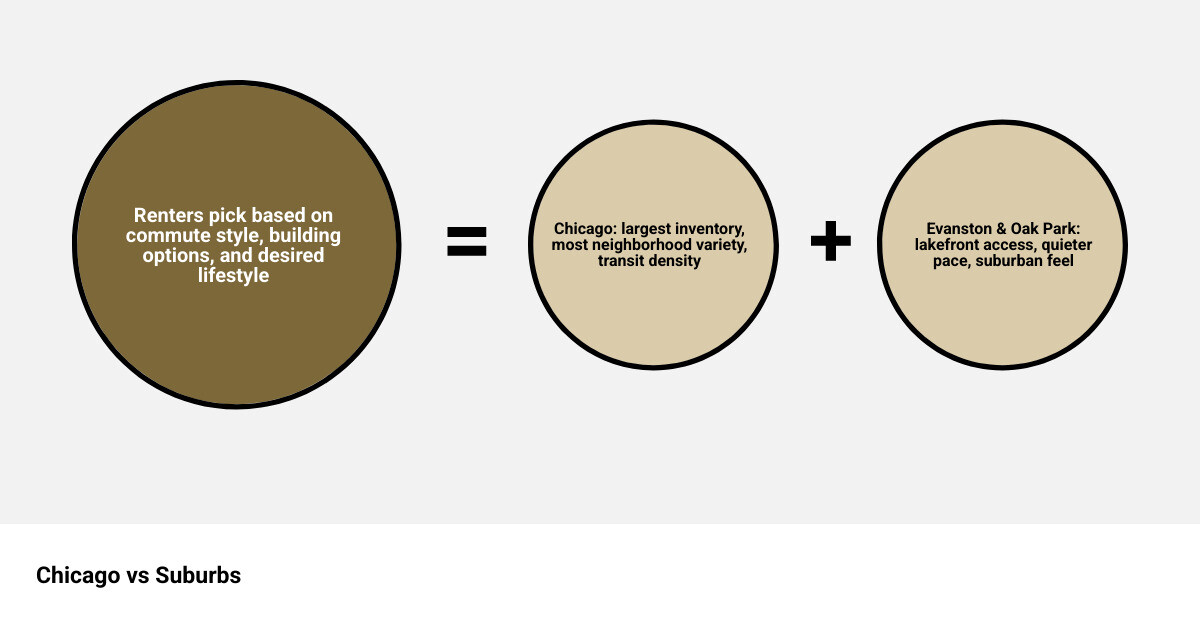
Some renters also compare Chicago with nearby suburbs such as Evanston and Oak Park.
The biggest differences usually come down to:
- commute style
- building inventory
- neighborhood feel
- density
- type of amenity packages
Chicago generally offers the widest apartment inventory and the deepest range of neighborhood choices. Evanston gives renters a lake-adjacent option with its own urban feel. Oak Park often appeals to renters looking for a different pace while staying connected to the city.
Trick #3: Compare listings across platforms, then verify every fee and lease detail
This trick sounds boring, which is exactly why it saves time. The exciting part is the apartment. The practical part is making sure the listing is real, current, and complete.
What listing volume looks like in May 2026
As of May 2026, research shows major listing platforms report very different Chicago totals:
- 19,645 listings on Apartments.com
- 16,824 listings on Zillow
- 5,709 listings on Redfin
That does not mean one platform is "right" and the others are wrong. It usually means:
- not every platform gets the same feed
- listings update on different schedules
- duplicate units may be grouped differently
- some platforms display broader inventory types than others
So if a renter only checks one site, they are seeing only part of the market.
How pricing and availability can vary from one platform to another
The same building can show different unit counts, different photos, and different availability windows depending on where it is listed.
Common reasons include:
- one site refreshed this morning and another yesterday
- concessions or specials have not synced yet
- a floor plan is listed under one ad but bundled on another
- a unit was leased, but the ad is still circulating
- direct building listings sometimes show the most current availability
The practical move is simple:
- shortlist units from more than one platform
- compare floor plans and amenity lists
- verify availability with the leasing team
- ask for a full breakdown of fees before applying
Typical lease terms, fees, and move-in requirements in Chicago
Chicago lease details vary by building, but several patterns show up again and again.
Common lease and move-in items include:
- 12-month leases
- shorter-term options in some communities
- application fees
- security deposit or move-in fee
- administrative fee
- pet fee and monthly pet rent where pets are allowed
- parking fee for garage or reserved spaces
- credit screening
- proof of income
- government-issued ID
- landlord or rental history checks
Some listings also show utilities included in rent, while others separate everything. In individual Chicago listings, it is not unusual to see certain packages such as heat, water, internet, or cable included, but that varies by building and unit.
Before signing, ask:
- Which utilities are included?
- Is parking separate?
- Is there a move-in fee, security deposit, or both?
- What is the pet policy?
- How much notice is needed before move-in?
- Are elevators or loading docks scheduled for move day?
- What happens at renewal?
For a deeper look, visit:
Where to look for income-restricted or voucher-supported options
For renters seeking voucher-supported or income-restricted housing, the Chicago Housing Authority is a key resource.
Research shows the CHA lists 341 properties through its programs and allows filtering by:
- community area
- bedroom count
- target audience
- program type
That can help renters identify public housing or project-based voucher options. It is also important to know that wait times can be very long for some property types and bedroom categories, so checking eligibility filters and current status is essential.
Chicago rent snapshot: studios, 1-bedrooms, and 2-bedrooms in 2026
A citywide snapshot helps set expectations before touring.
Average apartment pricing by unit type
In the current May 2026 market, one-bedroom apartments average $2,009 per month across Chicago, and that figure is up 4% from last year based on market data in the research.
Studios typically come in below the average one-bedroom, while two-bedrooms generally run higher. Downtown towers, newer luxury buildings, and units with standout views or premium amenity packages often sit at the upper end of the market.
The key point is not just the average. It is the spread.
Chicago has enough neighborhood variety that the same bedroom count can land in very different ranges depending on location and building type.
Why the same bedroom count can rent for very different prices
A one-bedroom is not always just a one-bedroom.
Pricing can shift based on:
- square footage
- layout efficiency
- neighborhood
- building age
- renovations
- lake or skyline views
- included utilities
- doorman service
- in-unit laundry
- parking
- balcony or terrace
- indoor or rooftop amenity access
A larger one-bedroom in a high-rise with views, included utilities, and full-service amenities may feel very different from a smaller one-bedroom in a simple walk-up. Same bedroom count, very different living experience.
Premium buildings and standout features renters watch for
When renters search higher-end Chicago inventory, several premium features show up repeatedly:
- rooftop pools
- indoor pools
- private terraces
- floor-to-ceiling windows
- heated garage parking
- dog wash stations
- concierge or door staff
- large fitness centers
- resident lounges
- package lockers
- rooftop grilling areas
Some standout feature sets are especially rare in Chicago. Pools are limited citywide. Pet wash stations are even less common. Private beach access is highly unusual and mainly tied to select lakefront properties such as Beachside Apartments – Apartments for Rent in Edgewater | Chicago Rentals .
If an indoor pool is on your wishlist, this guide may help: Apartments with Indoor Pool Chicago
Apartment search tips that save time and reduce surprises
The goal is not just to find a listing. It is to find the right listing before you spend a weekend touring five places that all mysteriously "just went off market yesterday."
Questions to ask before applying
Always ask these before paying any fee:
- What utilities are included?
- Is parking available, and how is it assigned?
- What pet fees or monthly pet charges apply?
- What is the earliest move-in date?
- How does renewal work?
- Is there a package room or locker system?
- How are maintenance requests handled?
- Are there any required building move-in procedures?
- Are amenity hours or access rules limited?
Those questions can tell you more in five minutes than twenty listing photos.
Documents to prepare before touring and applying
Most Chicago renters move faster when they have their paperwork ready.
Typical documents include:
- government-issued ID
- recent pay stubs
- proof of income
- bank statements
- landlord reference or rental history
- contact info for current landlord
- pet records, if applicable
Having these ready helps when a good unit appears and the market is moving quickly.
Best resources for renters researching the market
To go deeper before touring, use neighborhood and lease resources instead of relying only on listing pages.
Helpful starting points include:
- Apartments for Rent in Chicago Guide
- Chicago Apartments for Rent Guide
- Chicago Rental Market Trends
- Chicago Apartment FAQs
- Pet Friendly Apartments Chicago Guide
Frequently Asked Questions about apartments for rent Chicago IL
How many apartments are available in Chicago right now?
Active inventory varies by platform, but the research for May 2026 shows:
- 19,645 listings on Apartments.com
- 16,824 listings on Zillow
- 5,709 listings on Redfin
Because listings are syndicated and updated at different times, the real takeaway is that Chicago has a large active rental market with substantial inventory across neighborhoods and building types.
Are pools common in Chicago apartment buildings?
No. Pools are relatively rare in Chicago apartment listings.
Research indicates swimming pools appear in only about 4% of listings, which makes them more of a premium amenity than a standard one. Renters who want a pool should filter for it early instead of assuming it will show up in every newer building.
What do most Chicago landlords require before move-in?
Most require a completed application plus supporting documents such as ID, proof of income, and authorization for credit screening. Many buildings also require application-related fees, a security deposit or move-in fee, and additional charges for pets or parking when applicable.
Conclusion: Find the right fit faster with a neighborhood-first strategy
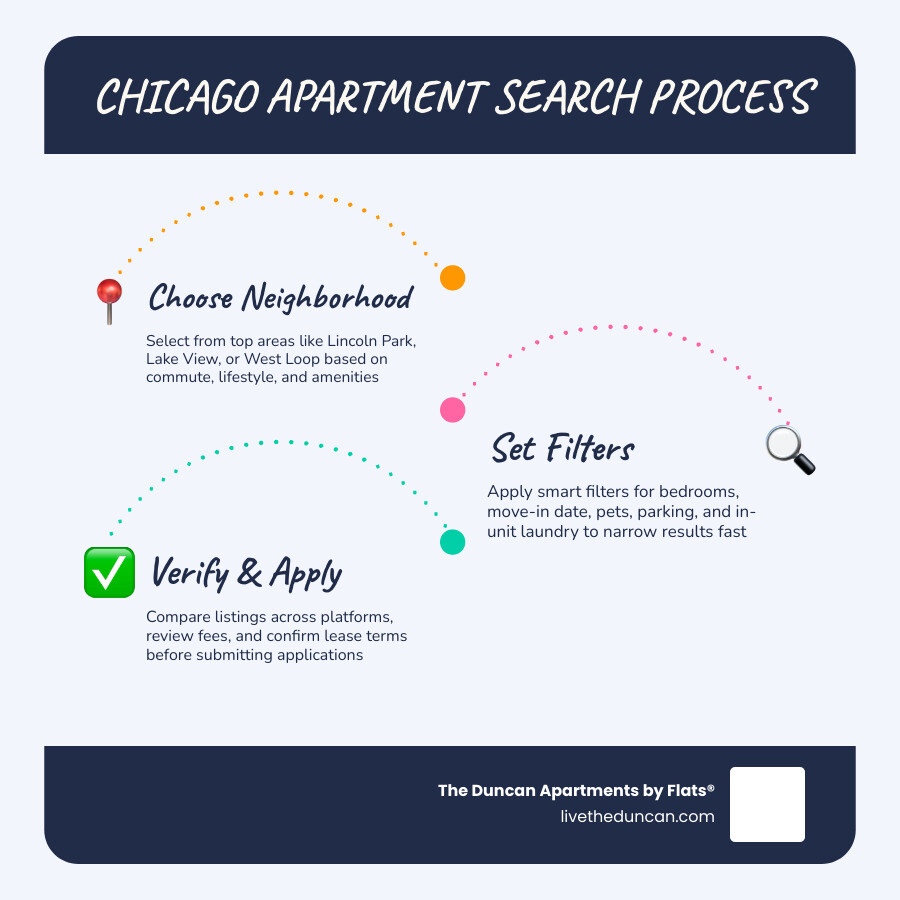
The easiest way to find the right apartment in Chicago is to search in the right order:
- choose the neighborhood
- filter for the amenities you actually need
- compare listings across platforms
- verify every fee and lease detail before applying
That process cuts down on wasted tours, duplicate listings, and last-minute surprises.
For renters focused on West Loop living, modern finishes, and standout amenities like an indoor pool and rooftop lounge, The Duncan Apartments by Flats® is part of that neighborhood-first search strategy.
For next steps, explore our full Apartments for Rent in Chicago Guide.


