


Why Your Next Apartment's Best Amenity is its Internet Connection
Apartments with high speed internet are no longer a luxury—they're a necessity. From joining video calls from the kitchen table and streaming the latest series in 4K to managing a network of smart home devices, an internet connection shapes every aspect of modern apartment living.
What makes apartment internet "high-speed"?
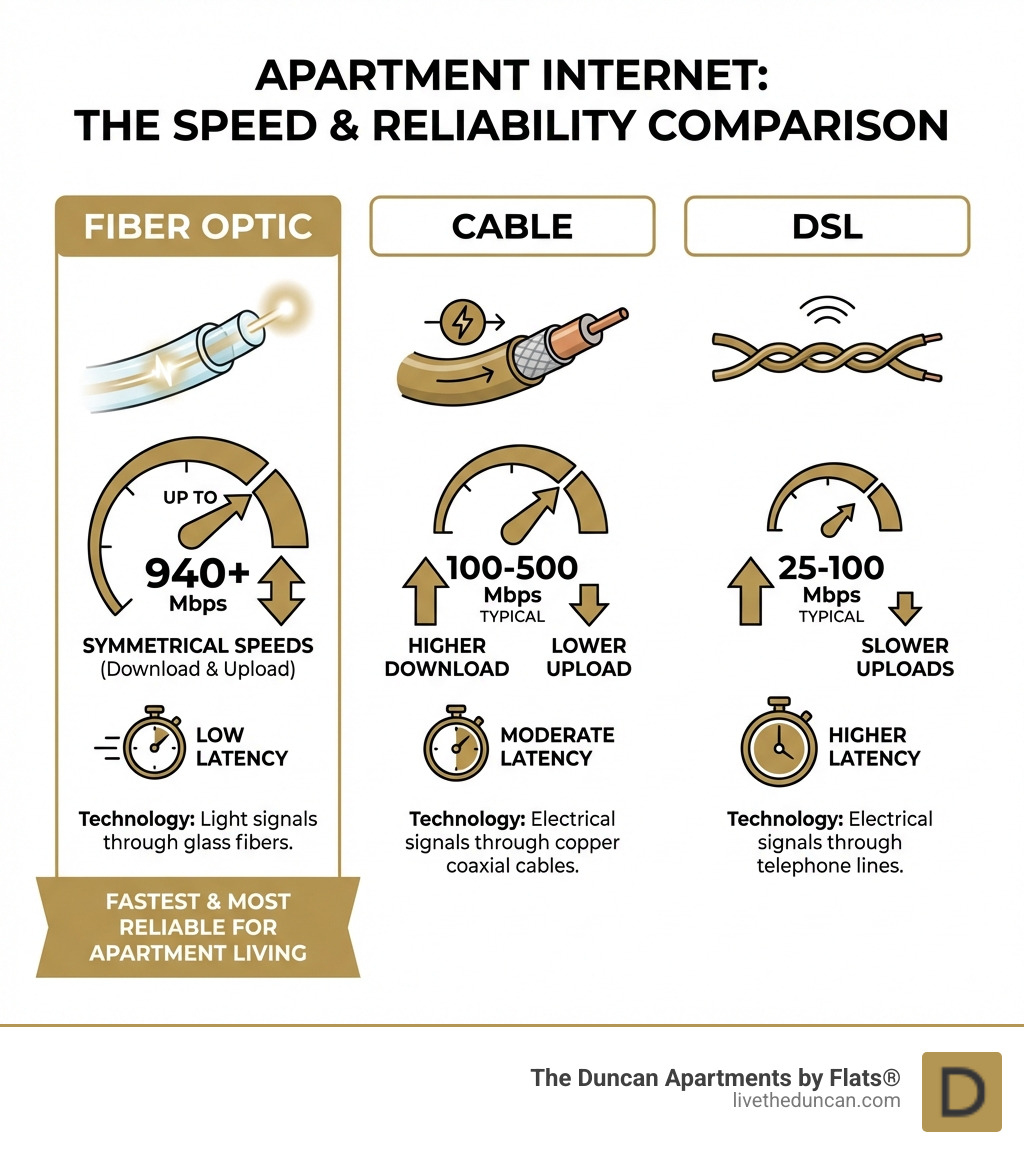
- Fiber optic connections - The gold standard, offering symmetrical speeds and low latency
- Bandwidth of 100+ Mbps - Sufficient for most households; 500+ Mbps ideal for multiple users
- No data caps - Unlimited usage without throttled speeds
- Modern equipment - Wi-Fi 6 or newer routers for optimal performance
- Strong signal coverage - Reliable connectivity throughout your entire unit
The shift to remote work and hybrid lifestyles has made reliable internet as essential as running water or electricity. Industry research shows that nearly half of apartment renters consider fiber access a top priority. However, evaluating an apartment's internet infrastructure can be challenging.
This guide breaks down what to know about high-speed internet in apartments—from understanding the difference between fiber and cable to testing signal strength during an apartment tour. It covers which features matter most, what questions to ask leasing agents, and how to ensure a new home can handle a modern digital lifestyle.
The Anatomy of a Great Apartment Internet Connection
When looking for an apartment, the focus is often on the layout, amenities, and location. But just as important is understanding the technical backbone of its internet service. It's important to understand what makes an internet connection truly great for apartment living.
What is Fiber Optic Internet and Why is it Superior?
Fiber optic internet sends data at nearly the speed of light. Unlike traditional copper cables that transmit electrical signals, fiber optic cables use thin strands of glass or plastic to send data as light pulses. This fundamental difference is why fiber is often considered the undisputed champion of internet connections, especially for apartments with high speed internet.
The benefits are numerous and impactful for daily digital life. Fiber offers lightning-fast download and upload capabilities, which means smoother video calls, quicker file transfers, and instant streaming. This is particularly crucial for remote workers who rely on consistent connections for video conferencing and for content creators who frequently upload large files. The symmetrical speeds, where upload speed matches download speed, are a significant advantage. This low latency also translates to virtually lag-free online gaming and seamless streaming, even in 4K. It is highly reliable, less susceptible to interference, and offers a superior experience.
It's no wonder that nearly half of apartment renters consider fiber access a must-have amenity, as highlighted in a recent study. This preference underscores its growing importance as a must-have amenity. As the digital age leads to more virtual engagements and data-intensive activities, fiber-ready apartments offer a significant advantage.
Wired vs. Wi-Fi: What’s the Difference for Apartment Dwellers?
In a home, there are two primary ways to connect to the internet: wired Ethernet and Wi-Fi. Both have their place, and understanding their strengths can help optimize an apartment's internet experience.

Wired Ethernet connections, which use physical cables plugged directly into devices, offer unparalleled stability and speed. For activities that demand consistent performance, such as online gaming, competitive esports, or critical video conferencing for work, a wired connection significantly reduces lag and minimizes disruptions. It’s a direct line to the internet, bypassing potential interference and ensuring a more robust connection. The presence of Ethernet ports in various rooms is a strong indicator of a well-thought-out internet infrastructure.
Wi-Fi, on the other hand, provides the convenience of wireless connectivity, allowing for free movement with laptops, tablets, and smartphones. It's essential for mobile devices and smart home gadgets that can't be tethered by a cable. However, Wi-Fi signals can be affected by physical barriers like walls and furniture, leading to variations in speed and reliability. Most people use a mix of both, enjoying the freedom of Wi-Fi for casual browsing and streaming, while opting for wired connections for more demanding tasks.
Understanding Bandwidth: More Than Just Speed
When discussing internet speed, the conversation is often about bandwidth. Think of bandwidth as the width of a highway: the wider the highway, the more cars (data) can travel on it simultaneously without traffic jams. Speed is how fast those individual cars are going.
In an apartment, especially in a busy city like Chicago, there are often multiple devices connected at once. Someone might be streaming a 4K movie in the living room, another person is on a video call in the home office, while a third is online gaming in their bedroom. Each of these activities demands a certain amount of bandwidth. If an internet connection doesn't have sufficient bandwidth, even if the "speed" seems high, the result can be frustrating slowdowns, buffering, and dropped connections.
For a modern apartment household, sufficient bandwidth is crucial. It ensures that all devices and activities can run smoothly and simultaneously without compromising the experience. It's the difference between a seamless digital lifestyle and a constant battle against buffering.
Key Features to Look for in Apartments with High-Speed Internet
When searching for a new home, many are looking for more than just a place to live; they're looking for a digital hub. Here is a checklist of features that signal an apartment is ready for an internet-dependent lifestyle.
A Strong Wi-Fi Signal Throughout Your Home
Wi-Fi dead zones in an apartment can be frustrating. A strong Wi-Fi signal throughout the entire unit is paramount. The strength of this signal is heavily influenced by the apartment's layout and the building materials used in its construction. Concrete walls, metal studs, and even large appliances can act as signal blockers, creating areas where devices struggle to connect.
Apartments with open-concept designs generally facilitate better Wi-Fi distribution. When touring an apartment, it's a good idea to pay attention to the layout and ask about the placement of the internet router. Ideally, the router should be centrally located to provide the best coverage. The goal is to ensure that every corner of the home, from the kitchen to the bedroom, has reliable connectivity. Checking the apartment amenities for details on internet provision can give an early indication of the thought put into connectivity.
Modern Routers, Modems, and In-Unit Hardware
The fastest internet plan in the world can be bottlenecked by outdated equipment. Just like a high-performance engine needs good tires, high-speed internet needs modern routers and modems. These devices are the gateway to the home network, and if they're not up-to-date, they can't effectively handle the speeds and demands of today's digital world.
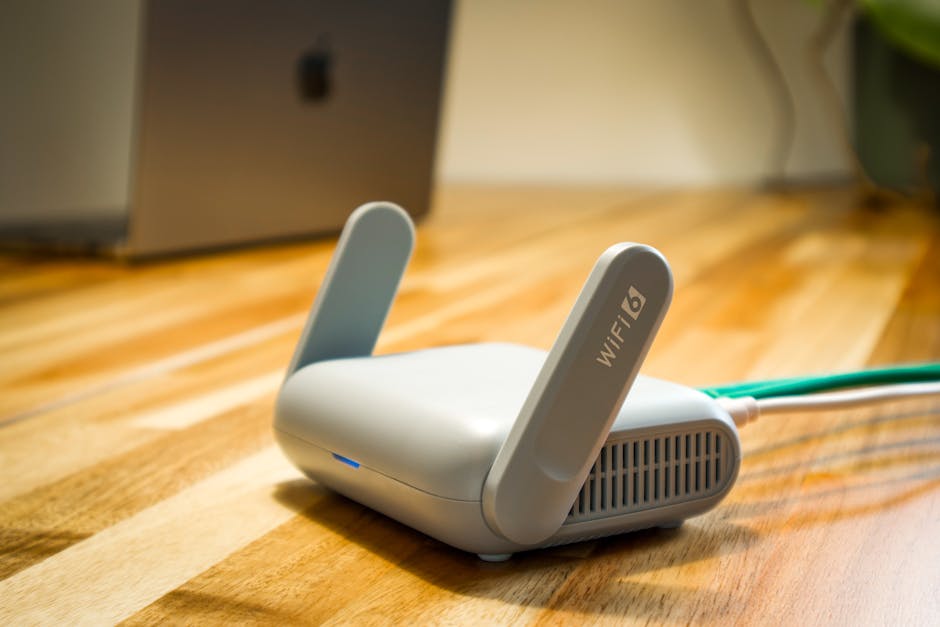
Apartments that provide modern hardware are preferable, ideally supporting the latest Wi-Fi standards like Wi-Fi 6 or even Wi-Fi 7. These newer standards offer faster speeds, better efficiency, and improved performance in congested environments—perfect for multi-device households in busy apartment buildings. If the apartment includes these devices, it can be a significant convenience, eliminating the need to acquire them separately. When inquiring about provided equipment, consider asking:
- What specific router and modem models are provided?
- Do they support Wi-Fi 6 or newer standards?
- Is there a maintenance or upgrade schedule for the equipment?
The Freedom of No Data Caps
Getting halfway through a favorite show only to have the internet slow to a crawl due to a data cap can be frustrating. For anyone who heavily relies on the internet for entertainment, work, or education, the freedom of no data caps is a significant benefit.
Unlimited data means it's possible to stream favorite shows and movies in 4K, download large work files, engage in extensive online gaming sessions, and browse without worrying about throttled speeds. It provides a straightforward, worry-free online experience, allowing for full use of a digital lifestyle.
Smart Home Compatibility and Your Internet
Homes are getting smarter, and the internet needs to keep up. From intelligent thermostats and lighting to smart locks and voice assistants, smart home technology offers convenience and efficiency. However, these IoT (Internet of Things) devices rely heavily on a consistent and robust internet connection to function seamlessly.
An apartment's compatibility with smart home technology isn't just about having the gadgets; it’s about having the internet infrastructure to support them. A reliable, high-speed connection ensures that all smart devices can communicate effectively, respond instantly, and integrate smoothly into daily routines. When considering luxury apartments in Chicago's West Loop, such as those at Luxury Apartments Chicago West Loop, the expectation is that the internet will be robust enough to handle all smart home aspirations, enhancing both convenience and security.
In-Building Support and Quality of Service (QoS)
Even the best internet can have off days. That is why in-building maintenance and support for internet service is a valuable feature. A proactive apartment management team that offers immediate access to tech support, or coordinates directly with Internet Service Providers (ISPs), can be very helpful. This means quicker resolution of connectivity issues and less time spent on hold with a call center. In larger residential buildings, this can be a significant advantage, giving residents an edge when resolving service problems.
Beyond just troubleshooting, some internet services offer Quality of Service (QoS) features. QoS allows for the prioritization of internet traffic, ensuring that critical activities like video conferencing for work or competitive online gaming get the bandwidth they need, even when other devices are active. This reduces lag and guarantees a smoother experience for the most important online tasks. It's a good idea to ask if a potential apartment's internet plan includes QoS options and how they can be configured to optimize the experience.
Beyond Your Four Walls: Community and Provider Factors
The internet experience isn't just about what's inside an apartment; it's also shaped by the broader community and the choices made by building management regarding internet providers.
Choosing an Apartment with Reputable ISP Options
The Internet Service Provider (ISP) servicing an apartment plays a huge role in the overall internet experience. A reputable ISP offers not just robust speed but also exemplary customer service, which translates to minimal downtime and quick resolution support for any connection issues. It is always a good idea to inquire about the ISPs available in an apartment building. Some buildings may have exclusive agreements with a single provider, while others offer a choice of several. Having multiple options can foster competition and potentially lead to better service quality.
Before committing, it can be helpful to look for feedback from existing tenants about the internet services. Online forums and local community groups can provide valuable insights into an ISP's reliability and customer support. This due diligence helps ensure that digital needs will be met by a provider known for quality.
The Role of Community Networks and Shared Wi-Fi
Some apartment buildings, particularly those designed for modern living, offer community networks or shared Wi-Fi in common areas. This can be a fantastic perk. The ability to seamlessly connect to Wi-Fi in the fitness center, co-working spaces, or rooftop lounge without using mobile data is a great convenience. Places like the Apartments with Fitness Center Chicago often provide this feature.
Beyond convenience, community networks can also act as a backup solution if a personal internet connection faces interruptions. It fosters a connected living environment and provides an additional benefit, especially for those who enjoy working or socializing in shared spaces. Inquire about the availability and reliability of these community networks.
How to Vet a Property’s Internet Before You Sign the Lease
Just as one would check the water pressure or closet space, it's important to thoroughly vet an apartment's internet capabilities before signing a lease. Here are some actionable steps:
- Ask the Right Questions:Ask the leasing agent directly about the internet service. Inquire about:
- The available ISPs and typical speeds.
- Whether fiber optic internet is available.
- Whether internet is a provided amenity or if residents need to arrange their own service.
- What kind of in-building support is available for internet issues.
- The age and type of provided modem/router, if applicable.
- Whether there are data caps.
- If there's community Wi-Fi in common areas.
- Test the Signal During Tours: If possible, bring a smartphone or laptop to test the Wi-Fi signal in different rooms of the apartment. Note any dead zones or areas with slow connectivity. If the building offers communal Wi-Fi, test that too.
- Check Online Forums and Reviews: Search for online reviews of the apartment building or management company, specifically looking for comments related to internet service. Tenant forums can also provide candid insights.
- Confirm Smart Home Compatibility: If smart home integration is important, confirm that the internet infrastructure can support multiple IoT devices without performance issues.
By taking these steps, prospective residents can ensure that a future home, whether it’s one of the Apartments for Rent in Chicago or elsewhere, is equipped for a modern digital lifestyle.
Frequently Asked Questions about Apartment Internet
Navigating apartment internet can sometimes feel like learning a new language. Here are some common questions and answers.
What is considered "high-speed" internet for an apartment?
The definition of "high-speed" has evolved dramatically. For simply browsing and checking emails, speeds around 50-100 Mbps might suffice. However, for a modern apartment household, especially in a vibrant city like Chicago, anything less than 100 Mbps is considered the bare minimum for a comfortable experience.
For those who frequently stream 4K content, engage in online gaming, or have multiple users and devices connected simultaneously, speeds of 500 Mbps or more are highly recommended. Gigabit speeds (1,000 Mbps or 1 Gbps) are increasingly becoming the gold standard, offering an incredibly robust connection that can handle virtually any demand. Also look for symmetrical speeds, where upload and download rates are similar, which is particularly beneficial for video calls and content creation.
How can I improve a weak Wi-Fi signal in my apartment?
A weak Wi-Fi signal can be a major inconvenience. Here are some tips to boost the signal:
- Optimal Router Placement: Move your router to a central, liftd location in your apartment, away from walls, large metal objects, and electronics that can cause interference.
- Wi-Fi Extenders or Mesh Networks: For larger apartments or those with tricky layouts, Wi-Fi extenders or a mesh Wi-Fi system can significantly improve coverage by creating multiple points of access.
- Minimize Interference: Cordless phones, microwaves, and even some smart home devices can interfere with Wi-Fi signals. Try to keep your router away from these items.
- Use Wired Connections: For stationary devices like smart TVs, gaming consoles, or desktop computers, a wired Ethernet connection is always more reliable and faster than Wi-Fi.
- Update Router Firmware: Ensure your router's firmware is up-to-date, as updates often include performance improvements.
How is Internet Service Handled in Apartments?
How internet service is handled can differ significantly from one apartment building to another.
- Provided as an Amenity: Some modern apartment complexes, particularly those focusing on a tech-forward lifestyle, provide high-speed internet as a building-wide amenity. This offers a seamless experience without the need for residents to arrange for individual setup.
- Resident-Managed Service: More commonly, residents are responsible for choosing their own provider from the options available to the building and setting up their own service.
- Building-Wide Provider: Some buildings have an agreement with a specific ISP, meaning all residents use that single provider for their service.
It's crucial to clarify the internet arrangement with the leasing team early in an apartment search. Ask whether internet is a provided amenity, which providers are available, and what the process is for getting connected. This ensures a clear understanding of the internet options.
Find Your Connection in the Perfect Apartment
In today’s connected world, an internet connection is more than just a utility—it's the lifeline to work, entertainment, and social lives. This article has explored the ins and outs of what makes for truly high-speed internet in apartments, from the foundational superiority of fiber optics and the importance of ample bandwidth, to the practicalities of strong Wi-Fi signals, modern equipment, and the freedom of no data caps. It has also highlighted the importance of in-building support, reputable ISPs, and community networks, alongside actionable steps for vetting an apartment's internet before committing.
Choosing an apartment with robust internet infrastructure helps ensure that a digital lifestyle in a busy city like Chicago is seamless and stress-free. An apartment isn't just a living space; it's a hub for innovation, connection, and relaxation. An apartment that understands and prioritizes this digital need is truly a place to call home.
For those searching for an ideal home in Chicago's West Loop, where modern luxury meets unparalleled convenience and connectivity, explore The Duncan Apartments. The Duncan offers an elevated living experience designed for today's urban dweller.


