


Understanding Chicago's Requirements Ordinance
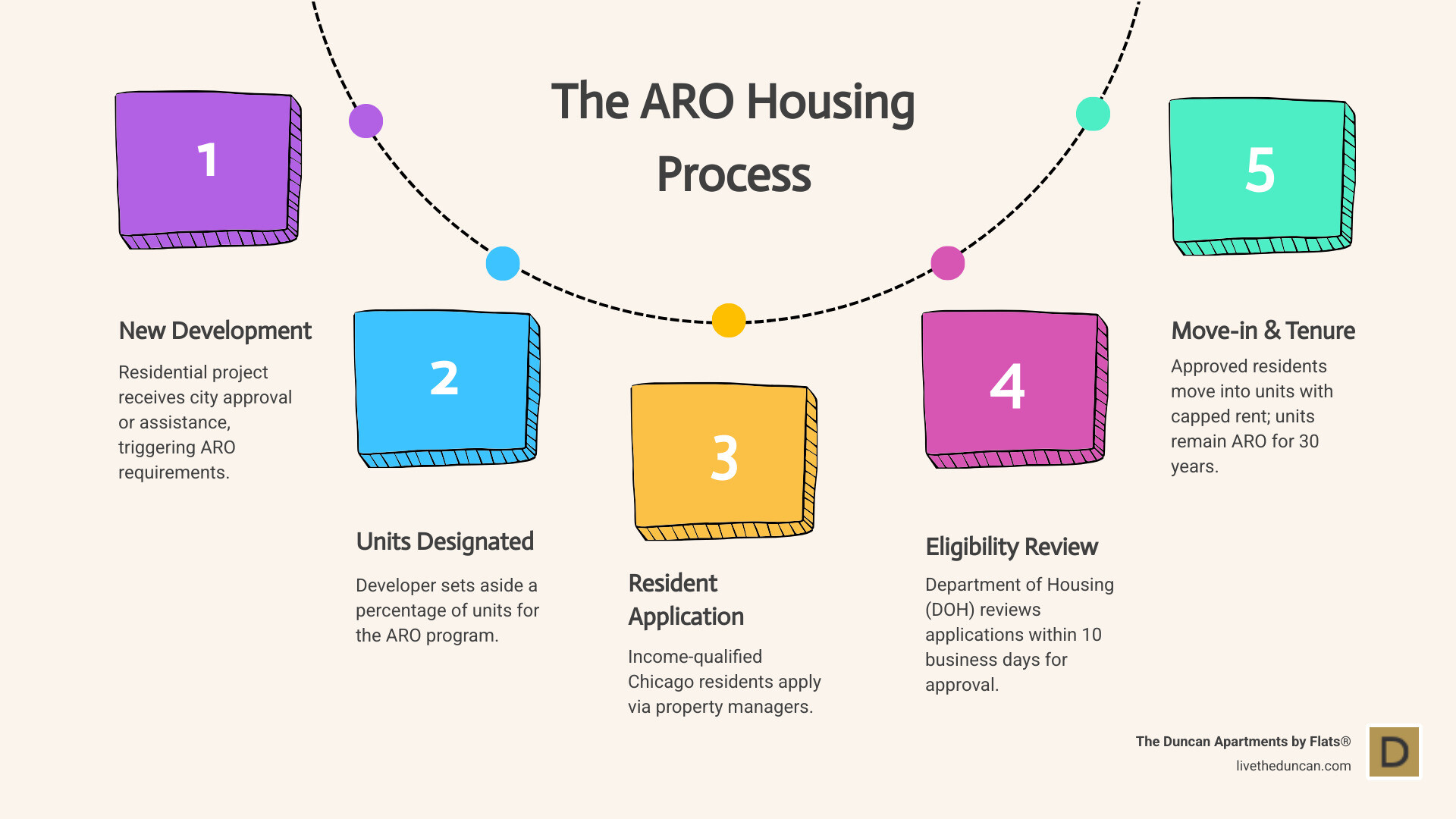
ARO housing refers to apartments created through Chicago's Requirements Ordinance, a city program that requires developers to set aside a percentage of units in new residential projects for qualifying residents. These units help create inclusive housing opportunities across Chicago's growing neighborhoods.
Key Facts About ARO Housing:
- What it is: Units in new developments reserved for households that meet specific city guidelines
- Who qualifies: Chicago residents whose household meets specific guidelines based on household size
- Where to find units: Through the City of Chicago ARO Map
- Application process: Contact property managers directly, submit required documentation, pass DOH review
- Duration: Units remain available for 30 years
The ARO program uses inclusionary zoning to harness private investment for creating housing opportunities in communities that typically see only one type of development. When developers receive city assistance, zoning changes, or land sales for large residential projects, they must include ARO units or contribute resources toward the program.
This allows residents to find newly built apartments in various Chicago neighborhoods. The program's primary mission is to push back against longstanding patterns of segregation and exclusion by ensuring that new development includes residents from all walks of life.
For young professionals, growing families, or anyone looking for a quality place to call home in Chicago, understanding how ARO housing works can present new housing options.
Understanding Eligibility for ARO Units
Navigating the landscape of ARO housing begins with understanding who qualifies. The City of Chicago has established clear guidelines based on factors like household size to ensure these units reach those they are intended to serve. If you're a Chicago resident, your household's specific characteristics are the primary factor in determining eligibility.

How Eligibility is Determined
You might be wondering, "What determines eligibility?" The City of Chicago uses a set of criteria to identify qualifying households for the ARO housing program. These guidelines are established by the city and are based on specific household characteristics. To qualify for an ARO unit, your household must meet the criteria designated for that specific unit. These guidelines are set annually by the city and are subject to change, so it's always wise to check for the most current requirements when you apply.
The Step-by-Step Application Process for ARO Housing
Applying for ARO housing involves several stages. Understanding each stage, from finding a property to signing a lease, can make the process smoother and more transparent.

Step 1: Finding and Inquiring About ARO Properties
Your first task is to locate properties that participate in the ARO program. The City of Chicago provides invaluable tools for this. A good place to start is the official ARO Rental Buildings Map. This interactive map allows you to identify rental properties across the city with ARO units. Clicking on a data point on the map will reveal the property's address, contact information, unit types, and the specific program guidelines it follows.
Once you've identified a property that sparks your interest, your next step is to contact the Property Manager or Leasing Agent directly. They are your primary point of contact for inquiries about ARO housing unit availability and the specific application process for their building. ARO unit availability is often on a first-come, first-served basis, so prompt action can be beneficial. In some instances, a third-party company may assist a property's leasing team in guiding applicants through the City of Chicago ARO application process.
Step 2: Gathering Required Documentation for your aro housing application
Once you're ready to apply, you'll need to prepare a comprehensive set of documents to verify your eligibility. The Property Manager or Leasing Agent will assess your household's eligibility against the requirements for the specific ARO unit. While requirements can vary slightly, here's a list of documentation typically requested:
- Proof of household details: Documents to verify household size and residency.
- Eligibility verification documents: Official paperwork to confirm your household meets the specific program guidelines. This may include letters from employers or other sources.
- Proof of identification: Valid government-issued IDs for all adult household members.
- Rental history: To demonstrate your past tenancy.
- Student Status Affidavit: If you are a full-time student, you will need to meet specific exemptions and provide proof to verify your exemption. Without this documentation, your application may be denied.
Ensuring all your documentation is current, accurate, and complete will help streamline your application.
Step 3: The Review and Approval Process
After you've submitted your application and all the necessary documentation, the review process begins. Initially, the Property Manager or Leasing Agent will review your application to ensure you meet the preliminary eligibility requirements for the ARO housing unit. If they find you eligible, they will then require you to sign a Tenant Eligibility Certification form. This form is a crucial document that confirms the accuracy of the information you've provided. A wet signature or DocuSign is usually required for this.
Following the property manager's initial review, your application moves to the City of Chicago's Department of Housing (DOH). DOH staff conducts a secondary eligibility review, a vital step to ensure compliance with all ARO guidelines. The DOH typically notifies the Property Manager or Leasing Agent of their approval or denial within ten business days. If approved, the Property Manager or Leasing Agent will then contact you to finalize the process and sign your lease, bringing you one step closer to your new home!
Navigating Key ARO Program Rules and Regulations
Understanding the finer points of the ARO program can empower you as an applicant. From your rights during the application process to the long-term commitment of these units, knowing these details is key.
Your Rights and Options as an Applicant
Even with the best preparation, sometimes applications don't go as planned. If your ARO housing application is denied, don't despair – you have rights and options. The City of Chicago's ARO program ensures transparency and fairness. You have the right to request an explanation for the denial. If you believe the decision was made unfairly or based on incorrect information, you also have the right to appeal. You'll receive official paperwork detailing how to initiate this process, and it's important to submit your appeal in writing within ten business days from the date you receive the notice of ineligibility.
Understanding the Different Types of aro housing
The ARO program encompasses both rental and owner-occupied units, each with slightly different structures. For rental units, eligibility is determined by specific city guidelines for each property. These units are managed by property managers who work within the ARO framework.
For those dreaming of homeownership in Chicago, the ARO program also includes owner-occupied units. These units are administered by the Chicago Housing Trust. These homes are designed for households that meet a specific set of city guidelines. A significant aspect of the ARO program is its long-term vision: all designated ARO units, whether rental or owner-occupied, must remain available for qualifying residents for a period of 30 years. This long-term commitment ensures stability and continued housing opportunities within Chicago's communities.
Which ARO Ordinance Applies?
The ARO housing program has evolved over time, with different versions of the ordinance in effect depending on when a development received city approval. Understanding which ordinance applies is particularly relevant for developers, but it's good for prospective residents to know as well.
The most recent iteration is the 2021 ARO Ordinance, formally known as Chapter 2-44-085 of the Municipal Code of Chicago. This version applies to residential developments that received City Council approval for an entitlement, city land sale, or financial assistance after October 1, 2021.
Prior to this, the 2015 ARO Ordinance (Chapter 2-44-080) governed developments. This older version applies to residential developments that received City Council approval for a rezoning, city land sale, or financial assistance before October 1, 2021, provided that a building permit application for the residential development was submitted before October 1, 2025.
It's worth noting that there were also specific pilot areas with their own ordinances, such as the Near North/Near West, Milwaukee Corridor, and Pilsen/Little Village. However, these pilot programs have since expired, with their ordinances repealed on October 1, 2021, or December 31, 2023.
Developers play a crucial role in the ARO program. They are responsible for incorporating these designated units into their projects when they receive city assistance or zoning changes. This obligation ensures that as Chicago grows and new developments emerge, opportunities for residents from all walks of life are integrated into the fabric of our city.
Where to Find ARO Units and Additional Support
Finding an ideal ARO housing unit in Chicago is made simpler with a variety of available resources. Having the right tools can help in navigating this process successfully.
Official City Resources for Finding ARO Units
The City of Chicago offers several official channels to help you locate available ARO units:
- ARO Rental Buildings Map: This interactive map is an excellent starting point for finding rental properties with ARO units. Each point on the map provides the property's address, contact information, and details about the specific ARO units, including unit type and program guidelines. You can access it directly via the City of Chicago ARO Map.
- Chicago Housing Trust Units Map: If you're looking for owner-occupied ARO units, the Chicago Housing Trust Units Map shows properties administered by the Chicago Housing Trust. For a detailed list of for-sale ARO properties, it is best to contact the Chicago Housing Trust directly.
- Department of Housing (DOH) Resource List: The DOH also provides a comprehensive Housing Resource List that includes properties available through ARO and other city programs. This list can often be filtered by community area, property type, name, address, and zip code, allowing you to narrow down your search effectively.
Should you have any questions or need additional clarification about the ARO program, you can always email the City of Chicago's Department of Housing at ARO@cityofchicago.org. They are a valuable resource for official information.
Exploring ARO Floor Plans in Chicago
Once you've identified potential properties, the next exciting step is to explore the specific ARO housing floor plans that might be available. Many properties, like The Duncan Apartments, will showcase their ARO offerings on their websites. These pages often detail the unit types available (e.g., studios, one-bedroom, two-bedroom) and the specific program guidelines they follow.
For instance, you might find Example ARO Plans or other Example ARO Plans listed, giving you a visual and descriptive overview of what's on offer. It's common for waitlists to exist for specific unit sizes, so checking the property's website or contacting their leasing team directly is the best way to get the most current information. Keep an eye out for updates, as availability can change!
Conclusion: Your Path to an ARO Home in Chicago
The ARO housing program is a key part of Chicago's commitment to creating a vibrant and inclusive city where residents from all walks of life can find a place to thrive. Understanding the ordinance, eligibility requirements, and application process can present opportunities in new and exciting communities. This guide provides the knowledge and resources to take the next step.
At The Duncan Apartments, participation in programs that contribute to Chicago's diverse housing landscape is a priority. Its modern, stylish apartments in the West Loop offer spacious floor plans and luxury amenities, providing a welcoming environment for residents. To explore options and find a new living experience, learn more about the ARO housing opportunities available.
A new home in Chicago could be the next step. Explore ARO Plans at The Duncan Apartments and envision a future in this dynamic community.


