


Why Chicago Green Building Matters Now More Than Ever
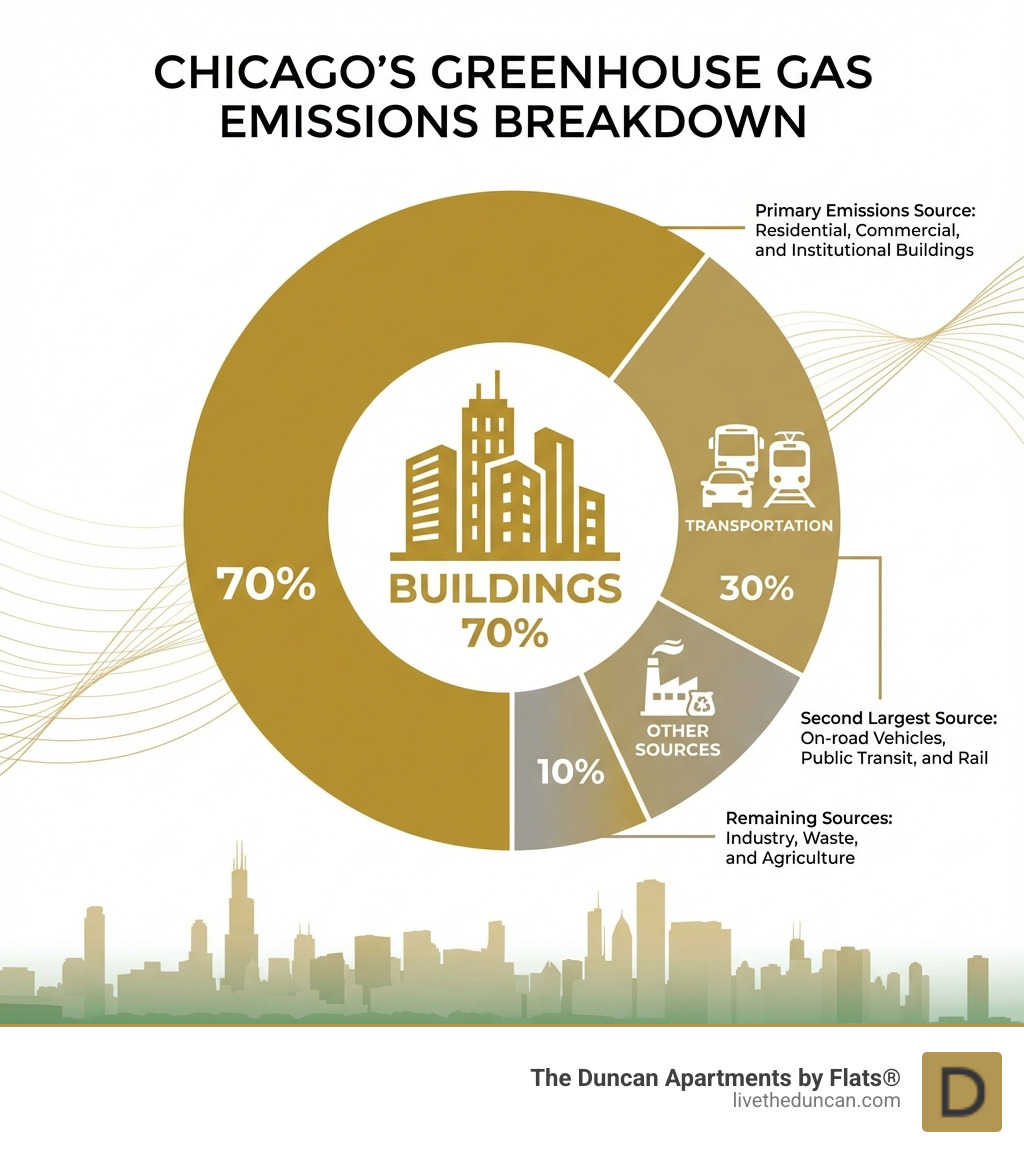
Chicago green building is changing how the city addresses its biggest environmental challenge: buildings account for 70% of the city's greenhouse gas emissions. Understanding this movement means grasping how Chicago is reshaping its skyline—from historic retrofits to cutting-edge new construction—to create a more sustainable, livable city.
Key facts about Chicago's green building landscape:
- 70% of Chicago's carbon pollution comes from buildings, making them the primary target for climate action
- 71% of Chicago's office space is now LEED or Energy Star certified, one of the highest rates in the nation
- Chicago is the 7th city globally to achieve LEED for Cities Platinum certification
- The Chicago Energy Benchmarking Ordinance requires buildings over 50,000 square feet to track and report energy use annually
- Major policies include the 2022 Energy Change Code, the Energy Rating System, and proposed Clean Buildings Ordinance
Chicago didn't become a green building leader overnight. The city's architectural DNA—from the Monadnock Building's energy-efficient masonry to today's all-electric Salesforce Tower—tells a story of innovation, setbacks, and renewed commitment.
The stakes are clear. As architect Doug Farr notes, some of Chicago's "least energy-efficient buildings were built in the 1950s and served as a global inspiration"—but not in a good way. The glass-heavy designs that followed increased energy consumption worldwide.
Today, Chicago is correcting course. The city's Climate Action Plan, energy benchmarking requirements, and billions in federal funding from the Inflation Reduction Act are driving real change. For residents, this means improved energy efficiency, healthier indoor air, and a city better prepared for climate challenges.
Whether you're considering where to live, work, or invest, understanding Chicago's green building movement reveals how the city is building a better future—one structure at a time.
The Roots of Sustainability: Chicago's Architectural Evolution
Chicago's architectural journey is a fascinating tale of innovation and adaptation, one that surprisingly began with inherently sustainable principles long before the term "green building" was coined. The city is, after all, the birthplace of the skyscraper, and these early structures inadvertently laid some groundwork for sustainable design.
Consider the historic Monadnock Building, an architectural marvel from the late 19th century. At 16 stories, it was once the tallest commercial building in the world with load-bearing brick walls. Buildings of that era tended to be constructed with masonry, featuring smaller floor plans, thick walls, and high ceilings. Crucially, they relied on punched windows rather than floor-to-ceiling glass and used natural ventilation. Architects drew from classical architectural principles to help shade, cool, and circulate air, making these buildings surprisingly energy-efficient even today. The Monadnock's original heating system from 1891, for example, is still functioning and uses little energy per square foot.

From Passive Design to High-Energy Consumption
This era of passive design, where buildings responded intrinsically to their environment, began to shift significantly in the mid-20th century. The second architectural era Chicago is known for, launched by Ludwig Mies van der Rohe's iconic 860-880 Lake Shore Drive towers, marked a pivotal change. These "Glass House apartments," as they're affectionately known, are about 85 percent façade glass. While aesthetically groundbreaking, they also contributed to some of the highest Energy Use Intensity (EUI) figures.
Post-war construction saw a widespread adoption of steel and concrete, which allowed for lighter, more open structures and expansive glass facades. These designs, while modern and visually striking, often necessitated mechanical systems for heating, cooling, and ventilation, leading to a dramatic increase in energy consumption and, consequently, higher carbon footprints. The global architectural community looked to Chicago's mid-century designs for inspiration, unknowingly contributing to a worldwide surge in building energy use. Buildings and construction now account for about 40 percent of CO2 emissions and 35 percent of energy consumption globally, and the majority of modern buildings have little resilience to climate change.
The Modern Challenge: Re-greening a Glass City
Chicago's unique climate—with strong winds and cold, snowy winters—presents a particular challenge for its built environment. The city's buildings often require substantial heating, consuming three to four times more energy for heating than cooling. The prevalence of glassy architecture, a legacy of mid-century modernism, is often contrary to what the city's climate demands for optimal energy performance.
This inherent conflict between aesthetic preference and environmental necessity underscores the modern challenge: how to re-green a city known for its glass towers? The energy used to power these and other buildings represents about 70 percent of Chicago's greenhouse gas emissions, a statistic that drives the city's intense focus on efficiency. Balancing the desire for stunning architecture with the need for high-performance, climate-responsive buildings is a constant endeavor, pushing innovation to redefine what Chicago green building means in the 21st century.
Building a Greener Future: Landmark Policies and Projects
Despite the challenges posed by the city's architectural history and climate, Chicago has emerged as a global leader in green building. This isn't just wishful thinking; it's backed by concrete achievements and ambitious policies. Chicago is only the seventh city in the world to achieve LEED for Cities Platinum, the U.S. Green Building Council’s highest level of certification, a testament to a city-wide commitment to sustainability. Furthermore, an impressive 71 percent of the city's office space is LEED or Energy Star certified, demonstrating a robust adoption of green practices within the commercial sector. This success is largely due to strong public-private partnerships and the dedication of organizations like the Illinois Green Alliance, which has been instrumental in advocating for and implementing green building practices.
Foundational Policies Driving the Chicago Green Building Movement
The city's commitment to a greener future is enshrined in a suite of comprehensive policies designed to reduce emissions, conserve resources, and promote sustainable development. These initiatives create a framework for both new construction and existing buildings:
- Chicago Energy Change Code: An update to the city's energy code, passed last year, this code applies to building permits and incentivizes the use of equipment types and energy sources that save energy and reduce carbon footprints for both residential and commercial buildings. This makes Chicago among the first major U.S. cities to adopt and exceed the 2021 International Energy Conservation Code (IECC).
- Chicago Energy Benchmarking Ordinance: This foundational ordinance, adopted in 2013, requires residential, commercial, and institutional buildings 50,000 square feet or more to track and report their energy consumption annually. While covering less than 1% of the city's buildings, these structures account for approximately 20% of total energy use, making this a critical tool for transparency and identifying areas for improvement.
- Chicago Energy Rating System: Started in 2019, this system takes the data from the benchmarking ordinance and assigns a star rating (1-4 stars) to buildings, which must be publicly displayed. This increases visibility and transparency, encouraging building owners to improve their energy performance.
- Sustainable Development Policy: This policy explores the City of Chicago's sustainability standards, specifically for city-assisted projects, new planned developments and amendments, and site plan approvals and amendments. It requires these projects to include sustainable features, ensuring that public and large-scale developments meet high environmental standards.
- Construction and Demolition Debris Recycling: Mandating that contractors recycle at least 50 percent of recyclable construction and demolition debris generated in a project, this policy addresses waste reduction, a crucial aspect of sustainable building.
Iconic Examples of Green Innovation
Beyond policies, Chicago boasts a growing number of landmark green building projects that showcase the city's innovative spirit:
- City Hall Rooftop Garden: A pioneering example of green infrastructure, the City Hall Rooftop Garden is a prominent and highly visible symbol of the city's commitment to sustainability. It serves as a living laboratory and an inspiration for other green roof initiatives.

- Chicago Center for Green Technology (CCGT): Awarded a Platinum Leadership in Energy and Environmental Design (LEED™) rating from the U.S. Green Building Council (USGBC), the CCGT is a true model of environmentally friendly design. What makes it particularly unique is that it was the first renovated structure, government-owned building, and brownfield site in the country to earn this prestigious rating. It features solar and geothermal power, a rooftop garden that filters stormwater, and recycled finishing products, demonstrating how sustainability can revitalize urban spaces.
- Salesforce Tower: Opened in 2023, the Salesforce Tower in Chicago stands as a guide of modern Chicago green building. It is an all-electric project, reflecting strong corporate environmental values and setting a new standard for large-scale commercial developments in the city.
- Google's Thompson Center Renovation: Google's planned renovation of the iconic Thompson Center is another significant undertaking that reflects a commitment to all-electric design. This project highlights how even existing, well-known structures can be transformed to meet contemporary green building standards, driven by private sector innovation and corporate sustainability goals.
These projects, alongside continuous innovation from the city's Architecture, Engineering, and Construction (AEC) industry, demonstrate the city's dedication to leading the way in sustainable development.
The Dual Approach: New Construction and Retrofitting Chicago's Skyline
In the pursuit of a greener built environment, Chicago's strategy recognizes that a focus on new developments alone is insufficient. In established cities, where the vast majority of building stock will still be in place decades from now, addressing carbon and energy use in existing structures is critically important. Existing buildings already contain significant embodied carbon, which accounts for as much as 50 percent of whole life carbon emissions. Therefore, the city's strategy involves a dual approach: pioneering new green construction and retrofitting the existing skyline.
Pioneering New Green Construction
New construction in Chicago is increasingly designed with sustainability at its core, guided by advanced building codes and a vision for future-proofed buildings. The 2022 Energy Change Code, for instance, significantly improves energy efficiency requirements for new builds. Key aspects include:
- Advanced Standards: Chicago is embracing rigorous standards like Phius 2021, a "passive building" standard focused on extreme energy and carbon reduction, and the gold/emerald certification levels under the 2020 National Green Building Standard (NGBS).
- Solar-Ready Roofs: New low-rise commercial buildings are now designed with roofs engineered to support future solar panel installation, making them solar-ready from day one.
- EV-Ready Infrastructure: New residences with gas-fired appliances are required to have the electrical capacity for future conversion to electric appliances without major renovations, preparing the city's buildings for an all-electric future.
- Improved Insulation and Smart Grids: Requirements include improved insulation for buildings with balconies or parapets, and incentives for integrating smart heating, cooling, and hot water equipment with the electric grid.
These measures ensure that new buildings contribute minimally to the city's carbon footprint and are resilient to future climate challenges.
The Critical Role of Retrofitting
While new construction sets the bar, the sheer volume of existing buildings means that retrofitting is paramount to achieving the city's climate goals. Retrofitting offers a powerful way to reduce emissions because those buildings already exist, avoiding the significant embodied carbon associated with demolition and new builds. The city has an internationally recognized program for retrofitting older buildings, and is actively engaged in initiatives like:
- Retrofit Chicago: This program is a cross-sector effort to drive energy efficiency in all building types, providing roadmaps for more efficient buildings. It empowers building owners to make energy-saving upgrades that improve performance and reduce environmental impact.
- Energy Savings in Older Buildings: Many of Chicago's older structures, initially built with masonry and natural ventilation, hold surprising potential for energy efficiency improvements through modern retrofits. Upgrades to insulation, HVAC systems, and window replacements can dramatically reduce energy consumption.
- Preserving Architectural Heritage: Retrofitting allows for the preservation of the unique architectural heritage of the city while simultaneously making these buildings perform better environmentally. It's a win-win for both history and sustainability.
- Reducing Demolition Waste: By extending the life of existing structures through retrofits, the amount of construction and demolition waste is significantly reduced, further contributing to a circular economy.
For more information on how the city supports these efforts, the Chicago Energy Benchmarking Ordinance page provides valuable insights into tracking and improving building energy performance.
Here's a comparison of key strategies for new construction versus retrofitting:
| Feature | New Construction (Pioneering Green) | Retrofitting (Critical Role) |
|---|---|---|
| Energy Source | All-electric design, renewable energy integration | Conversion to cleaner fuels, improved system efficiency |
| Building Envelope | High-performance insulation, optimized window-to-wall ratio | Insulation upgrades, window replacement, air sealing |
| HVAC Systems | Geothermal, high-efficiency heat pumps, smart controls | HVAC modernization, smart thermostat installation, system optimization |
| Renewable Energy | Integrated solar panels, solar-ready roofs | Rooftop solar installation, off-site renewable energy procurement |
| Water Management | Rainwater harvesting, greywater recycling, low-flow fixtures | Low-flow fixture installation, efficient irrigation systems |
| Material Use | Locally sourced, recycled content, low-VOC materials | Prioritizing reuse, reducing demolition waste, sustainable material upgrades |
| Certifications | Phius 2021, NGBS Gold/Emerald, LEED new construction | LEED for Existing Buildings, Energy Star certification, Retrofit Chicago |
The Future of Chicago Green Building: Challenges and Aspirations
Looking ahead, the trajectory of Chicago green building is firmly set towards decarbonization and net-zero goals. The city's climate action plan aims to power all buildings by clean, renewable energy by 2035, a truly ambitious target. This journey, however, is not without its challenges, requiring continuous innovation and strategic partnerships to build a truly climate-resilient city.
Overcoming Problems and Seizing Opportunities
The pursuit of a greener built environment faces distinct challenges:
- Cold Climate: Chicago's harsh winters mean a significant demand for heating, which historically has been a major source of emissions. Designing for extreme cold while minimizing energy use requires advanced solutions.
- Aging Infrastructure: A large portion of the city's building stock is older, making retrofitting a complex and resource-intensive endeavor. The sheer scale of buildings needing upgrades is immense.
Yet, these challenges are met with significant opportunities:
- Inflation Reduction Act (IRA): The IRA provides substantial federal financial assistance, with billions available for energy efficiency and climate initiatives. This funding can significantly accelerate the adoption of green building practices and retrofits across the city.
- Illinois Climate Bank: The state of Illinois’ Climate Bank offers education and financing tools specifically for sustainable projects. It includes $7 billion for competitive grants to enable communities to deploy or benefit from zero-emission technologies.
- Private Sector Innovation: Chicago's robust AEC industry continues to drive innovation. Corporations like Salesforce and Google are leading by example with all-electric projects, showcasing how corporate values and market demand can propel the green building movement forward. The Illinois Green Alliance also offers resources like the new Building Energy Resource Hub, helping industry professionals steer policy and financing for decarbonization.
The Path to Net-Zero: Future Trends in Chicago Green Building
The journey toward a net-zero future is shaped by several key trends and aspirations:
- Proposed Emissions Ordinance: A proposed ordinance, introduced in January and currently under city council consideration, aims to eliminate harmful natural gas emissions by setting an indoor emissions limit. This would effectively require new construction to switch to clean power sources like electric or other high-efficiency systems.
- Electrification: A core strategy for decarbonization is the widespread electrification of buildings, transitioning away from fossil fuels for heating and cooling. This is supported by policies like the Energy Change Code, which mandates future-proofing for electric conversions.
- Renewable Energy Integration: The city is actively working towards procuring 100% renewable energy for municipal operations, with a portion coming from new renewable developments in the region. This commitment signals a broader shift towards powering all buildings with clean energy.
- Global City Comparison: While Chicago has achieved LEED for Cities Platinum, it is behind some European peers in certain aspects of sustainable architecture. However, the city compares closely with other major American cities, continuously learning and adapting best practices from around the globe to improve its climate resilience.
- Smart Building Technology: The integration of smart building technologies, such as advanced sensors, AI-powered energy management systems, and grid-interactive efficient buildings, will play an increasingly crucial role in optimizing energy use and achieving net-zero targets.
The future of Chicago green building is one of bold ambition, rooted in a deep understanding of the city's architectural past and driven by a collective commitment to a healthier, more sustainable urban environment for all.
Frequently Asked Questions about Green Building in Chicago
What is the main goal of Chicago's green building policies?
The primary goal of Chicago's green building policies is to drastically reduce greenhouse gas emissions, of which buildings account for a staggering 70%. By doing so, the aim is to improve the city's overall livability, improve public health, and strengthen its economic competitiveness by fostering innovation and creating green jobs. Mayor Emanuel's vision positions Chicago as a global leader in designing a path to a stronger environmental and economic future through green building achievements.
What is LEED certification and why is it important in Chicago?
LEED (Leadership in Energy and Environmental Design) is a globally recognized, third-party certification system for green buildings. It provides a framework for healthy, highly efficient green buildings. In Chicago, LEED certification is incredibly important because the city is a leader in its adoption, being one of only seven cities worldwide to achieve LEED for Cities Platinum status. This signifies a deep, comprehensive commitment to sustainability across all sectors, from municipal operations to private developments, and highlights the city's dedication to measurable environmental performance.
Can older buildings in Chicago be "green"?
Yes, retrofitting older buildings to improve energy efficiency is a critical and strategic part of Chicago's green building strategy. Programs like Retrofit Chicago actively work to make existing buildings more efficient, preserving the city's rich architectural history while significantly reducing their carbon emissions. Given that the majority of the city's building stock is already constructed, these retrofits are essential for achieving the city's overall decarbonization goals and are often more impactful than focusing solely on new construction due to the embodied carbon already present in these structures.
Conclusion: A More Livable and Sustainable City
A review of the Chicago green building landscape reveals a city deeply committed to changing its built environment. From the inherent sustainability of its earliest skyscrapers to the energy-intensive era of mid-century modernism, valuable lessons have been learned. Today, propelled by landmark policies, innovative projects, and a dual focus on new construction and critical retrofits, Chicago is charting a course towards a net-zero future.
The drivers behind this commitment are clear: buildings are the city's largest source of greenhouse gas emissions, making sustainable practices an environmental imperative. The city's approach has evolved from early architectural principles to modern initiatives like the Chicago Energy Rating System and the Climate Action Plan, all designed to foster sustainable development. Iconic projects like the City Hall Rooftop Garden and the all-electric Salesforce Tower stand as testaments to the city's progress.
This movement is not just about buildings; it's about people. The impact on the city's residents, economy, and overall livability is profound. It means healthier indoor environments, improved energy performance, and a city more resilient to the impacts of climate change. Corporate values and private sector innovation are playing a crucial role, collaborating with government initiatives to drive progress.
As Chicago continues to aspire towards decarbonization and net-zero goals, its green building efforts position it as a leader among global cities. The city is building a future where comfort, convenience, and environmental responsibility go hand-in-hand. The belief is that a sustainable city is a vibrant city, contributing to Chicago's greener tomorrow.
For those looking for a place that embodies the progressive spirit of Chicago, where modern living meets the energy of a thriving urban environment, The Duncan Apartments offers modern amenities to explore.


