


What Controlled Access Really Means for Your Daily Living
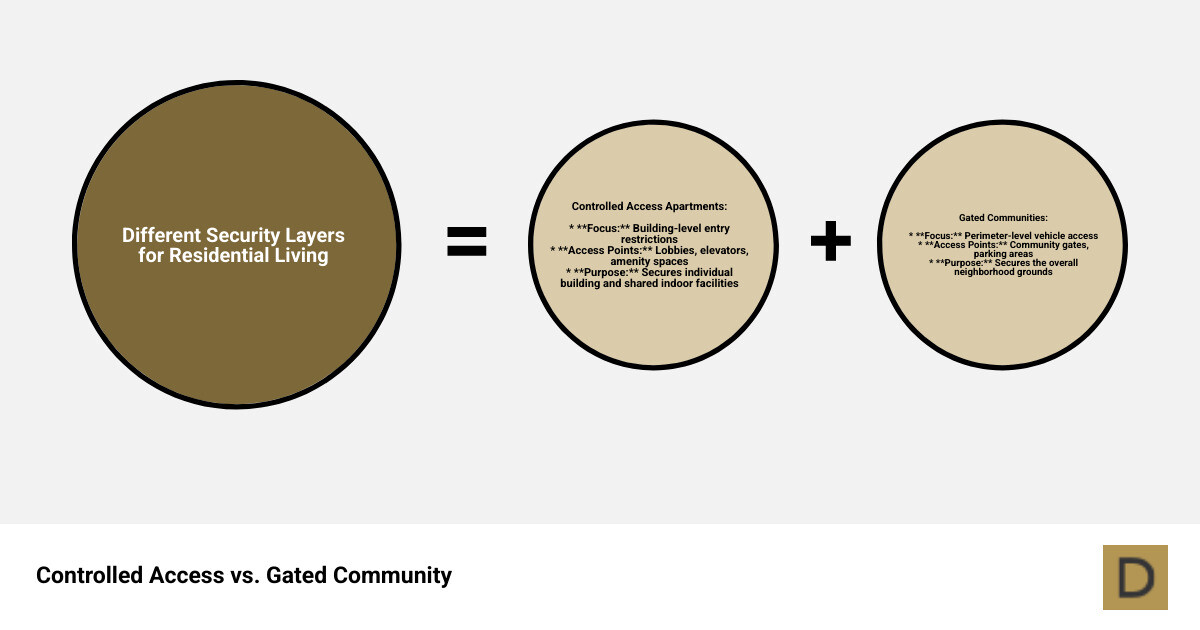
Controlled access apartments are residential buildings that restrict entry to authorized individuals only—typically residents, staff, and pre-approved guests—through systems like key fobs, mobile apps, PIN codes, or video intercoms.
Key features of controlled access apartments:
- Access credentials required - Key fobs, key cards, smartphone apps, or PIN codes needed to enter
- Regulated entry points - Main entrances, lobbies, elevators, and amenity spaces are secured
- Visitor management - Guests must be buzzed in or granted temporary access by residents
- Improved security - Only authorized individuals can access the building and its facilities
- Digital monitoring - Entry logs track who enters and when, improving accountability
As people open up their phones with a glance and manage their lives through apps, there is an expectation that navigating an apartment building should be just as seamless. Whether you're returning home after a long day at work or waiting for a package delivery, controlled access systems shape your daily experience in ways both visible and subtle.
But what exactly happens behind that sleek lobby keypad? How do these systems actually work? And more importantly, do the benefits outweigh the occasional inconvenience?
This guide breaks down everything you need to know about controlled access in modern apartment living—from the technology that powers these systems to the real-world tradeoffs you'll encounter. This guide will help you understand what to look for when evaluating apartments and whether controlled access aligns with your lifestyle and priorities.
The Technology Behind Modern Building Entry
At its core, a controlled access apartment system is a sophisticated method of regulating who enters a building and its various spaces. It's designed to automate property access for authorized individuals, simplifying entry while boosting security.
The fundamental components of an apartment access control system typically include an access control panel (the brains of the operation), an access card reader (where you present your credential), the credentials themselves (your key fob, card, or phone), and a door release mechanism (the electric strike or magnetic lock that opens the door). These systems are installed at various entryways, ensuring that only authorized people can pass through.
Key access points in a modern apartment building that benefit from controlled access include:
- Main entrances and lobbies: The first line of defense against unauthorized entry.
- Amenity spaces and community areas: Ensuring only residents can use facilities like gyms, pools, and co-working spaces.
- Mailrooms, package lockers, and delivery rooms: Preventing theft and ensuring secure package retrieval.
- Unit-level doors: For individual apartment security, often integrated with the building's main system.
Common Types of Controlled Access Systems
Over the years, various methods have been developed to manage building entry. Here are some of the most common types of controlled access systems you'll encounter:
- Key Fobs and Key Cards: These are perhaps the most widely recognized forms of electronic access. Using RFID or NFC technology, a resident taps or swipes their fob or card against a reader to gain entry. They are convenient and can be easily deactivated if lost or stolen.
- PIN Code Keypads: Residents enter a unique numerical code into a keypad to open up doors. While simple to implement, PIN codes can be less secure if shared widely or if the keypad is not regularly maintained.
- Intercom Systems with Door Release: These systems allow visitors to call a resident from the building's entrance. The resident can then visually identify the visitor (if a video intercom is present) and grant access remotely, often by pressing a button on their phone or a dedicated in-unit device.
- Cloud-Based Access Control: These systems operate and store data in the cloud, leveraging the Internet of Things (IoT). They offer property managers remote management capabilities, allowing them to issue, modify, or revoke access permissions from anywhere.
- Mobile Access Control: This increasingly popular option turns a resident's smartphone into their access credential, using technologies like Bluetooth Low Energy (BLE) or Near Field Communication (NFC).
Here's a quick comparison of some common credential types:
| Credential Type | Convenience | Security | What Happens if Lost/Forgotten |
|---|---|---|---|
| Key Fob/Card | High | Medium | Can be deactivated, requires replacement |
| PIN Code | High | Low | Code can be changed, easy to share |
| Mobile App | Very High | High | Can be remotely deactivated, phone battery dependent |
The Rise of Smart Access in Controlled Access Apartments

The landscape of apartment living is constantly evolving, and smart access is at the forefront of this change. Modern controlled access apartments are increasingly integrating advanced technologies to offer residents unparalleled convenience and security. These are systems that allow your smartphone to become your key, your video intercom to show you who's at the door, and even your unit's lock to respond to a tap on your phone.
This shift isn't just a luxury; it's a growing expectation. As much as 67% of renters want keyless smart locks, highlighting a strong desire for seamless, tech-driven entry solutions. These systems move beyond simple key cards to encompass:
- Mobile Access Control: As mentioned, this allows residents to use their smartphones as digital keys, often via an app. This is incredibly convenient, as most of us always have our phones with us.
- Keyless Entry: This broad term covers any system that doesn't require a traditional physical key. It includes mobile apps, PIN codes, and even biometrics.
- Video Intercoms: These systems allow residents to see and speak to visitors at the building entrance through a video feed, often accessible via a mobile app, before granting entry. This adds a crucial layer of visual verification.
- Biometric Scanners: While less common for main building entry due to implementation and privacy concerns, biometric options like fingerprint or facial recognition offer a high level of security for specific areas.
- Integration with Smart Home Features: Many modern access control systems can integrate with other smart home technologies within your apartment, such as thermostats and lighting, allowing you to manage your living environment from a single app.
More information about the amenities offered, including smart access features, is available at the amenities page.
How Do Mobile Access Systems Work?
Mobile access control systems harness the power of your smartphone to provide secure and convenient entry. Here's a breakdown of how they typically function:
- Smartphone as a Credential: Instead of a physical key or fob, your smartphone, with its unique digital identity, becomes your access credential. The system uses technologies like Bluetooth Low Energy (BLE) or Near Field Communication (NFC) to communicate with readers at entry points.
- Encrypted Credentials: The digital "key" on your phone is highly encrypted, making it more secure than traditional physical keys or even some fobs that can be duplicated. This reduces the risk of unauthorized access significantly.
- Remote Access for Guests: One of the biggest advantages is the ability to manage visitor access remotely. If you have friends coming over, you can use your apartment's mobile app to grant them temporary access, often by sending them a digital key or buzzing them in directly from your phone, no matter where you are.
- Temporary Access Codes: For service providers or infrequent guests, you might be able to generate one-time or time-limited access codes directly from your app.
- Delivery Passes: Some advanced systems allow property managers to issue one-time delivery passes to couriers, ensuring packages can be securely delivered to designated areas without compromising overall building security.
- Convenience: Imagine never having to worry about forgetting your keys. With mobile access, as long as you have your phone, you have your key. This streamlines daily routines and improves the overall resident experience.
Weighing the Pros and Cons of Controlled Access Living
Living in a controlled access apartment offers a unique blend of benefits and occasional challenges. It’s important to consider both sides to determine if this type of living environment aligns with your preferences.

Primary Benefit: Improved Security and Privacy
The most compelling reason residents choose controlled access is the improved sense of security and privacy it provides. Feeling safe and secure in one's home is a common desire, and controlled access systems play a significant role in achieving that peace of mind.
- Deterring Unauthorized Individuals: By requiring credentials for entry, these systems effectively deter casual intruders, solicitors, and other unwanted individuals from entering the building. This prevents unauthorized people from wandering freely through common areas.
- Reduced Unsolicited Traffic: Imagine fewer unexpected knocks on your door or unfamiliar faces in the hallways. Controlled access significantly reduces the amount of unsolicited foot traffic within the building, contributing to a quieter and more private atmosphere.
- Secure Package and Mail Delivery: With dedicated package rooms and secure entry for delivery personnel, controlled access helps protect your deliveries from theft, a common concern in urban living.
- Exclusive Access to Amenities: Access control ensures that only residents and their approved guests can use shared amenities like fitness centers, rooftop lounges, and pools, maintaining their exclusivity and preventing overcrowding.
- Peace of Mind: Knowing that robust security measures are in place allows residents to relax and feel more secure in their personal space. This intangible benefit is highly valued by many, even in neighborhoods with low crime rates.
For those seeking an elevated living experience where security and privacy are paramount, luxury apartments in West Loop often feature advanced controlled access systems. More information is available about luxury apartments in West Loop.
Potential Downsides and Inconveniences
While the benefits are clear, it's also important to have a complete picture. Living in a controlled access apartment can come with a few potential inconveniences:
- Visitor Management Challenges: While a key benefit, managing visitors can sometimes be a hassle. Guests might need to be buzzed in, or you may need to provide them with temporary access, which can be inconvenient if you're not home or your phone battery dies.
- Hassle of Buzzing in Guests: Forgetting to buzz someone in, or having to interrupt your activities to do so, is a common complaint.
- Forgetting or Losing Credentials: Misplacing your key fob or having your phone run out of battery can leave you locked out, requiring you to contact building staff or wait for a replacement. While modern systems allow for quick deactivation of lost credentials, getting a new one requires contacting the leasing office.
- Technology Failures: While generally reliable, like any technology, these systems can experience glitches. A temporary system outage or a reader malfunction could prevent entry.
- Power Outages and Internet Dependency: Some systems, especially cloud-based or mobile ones, rely on internet connectivity or power. While most buildings have backup power for essential systems, it's a factor to consider.
- Tailgating Risk: Even with sophisticated systems, there's always a risk of "tailgating," where an unauthorized person slips in right behind an authorized resident. Vigilance from residents is still important.
The goal of these systems is to balance security with convenience, ensuring they improve the living experience rather than detract from it.
Is a Controlled Access Apartment Right for You?
Choosing an apartment is a deeply personal decision, and whether a controlled access apartment is the right fit depends on your individual needs, lifestyle, and priorities.
Technology and Infrastructure
The implementation of controlled access is a significant feature for a residential building, reflecting a commitment to modern infrastructure and resident experience:
- System Implementation: Installing a robust access control system, especially modern, integrated ones, involves a considerable commitment to hardware (readers, panels, locks, cameras) and software.
- Ongoing Maintenance: These systems require regular maintenance, software updates, and occasional service to ensure they function flawlessly and remain secure.
- Advanced Technology: Cloud-based and mobile access systems often rely on sophisticated software and services to power them, which are part of the building's technological infrastructure.
- Operational Considerations: The operation and upkeep of these systems are integral to the building's management. This ensures residents can enjoy the benefits of the system.
- Desirable Amenities: High-end access tech like smart locks or video intercoms are often considered desirable amenities. In fact, studies show that residents often indicate a willingness to have new amenities, like a video intercom system, added to their building.
The presence of these systems reflects a commitment to resident security, privacy, and the convenience of modern living.
A Personal Choice: Evaluating Your Needs
For many, a controlled access apartment is more of a "want" than a "need." However, for others, it's an absolute necessity. Here's how to decide if it's right for you:
- Lifestyle Considerations: How often do you have visitors? Are you frequently away from home? If you value a quiet environment and minimal interruptions, controlled access can be a great fit. If you have many spontaneous guests, you might need to adapt to the visitor management protocols.
- Comfort with Technology: Are you comfortable using smartphone apps for daily tasks? Do you prefer traditional keys, or are you excited by keyless entry? Your comfort level with technology will influence your experience with modern systems.
- Importance of Privacy: Do you prioritize a living environment where only familiar faces are present? Controlled access significantly improves privacy by limiting who can enter the building.
- Questions to Ask When Touring:When looking at apartments, it's helpful to ask about:
- The specific type of access system used (fobs, apps, codes, staff).
- Visitor policies and how guests gain entry.
- What happens if you lose your credential or if the system malfunctions.
- Backup power plans during outages.
Making an informed decision means weighing the benefits against any potential inconveniences and considering your personal preferences. For a deeper dive into finding the perfect place, check out a guide to the best apartments in West Loop Chicago.
Value for Property Owners and Residents
Controlled access systems provide tangible benefits that improve the resident experience and offer advantages for property owners.
- Enhanced Property Appeal: Buildings with advanced security features like controlled access are often more attractive to potential renters, which can enhance the property's overall reputation.
- Improved Resident Satisfaction: Residents often feel more secure and valued when their building prioritizes security. This can lead to greater satisfaction with their living environment.
- Higher Resident Retention: Satisfied, secure residents are more likely to renew their leases, which contributes to a stable and consistent community.
- Operational Efficiency for Managers: Modern access control systems simplify property management. Managers can remotely issue and revoke access, monitor entry logs, and integrate with other property management software. This efficiency streamlines administrative tasks and can free up staff for more urgent resident requests. For example, having an automated access control system can reduce the need for staff on late-night shifts, as highlighted by some industry resources. More information on how property staff benefit from these systems can be found in this resource: Benefits for property staff.
Controlled access systems create a win-win situation, providing a safer, more convenient living experience for residents while optimizing operations and enhancing the property for owners.
Frequently Asked Questions about Controlled Access
Here are some common inquiries and their answers about living in a controlled access apartment.
What happens if I lose my key fob or phone?
Losing a key fob or having your phone die can be a moment of panic, but modern controlled access systems are designed to handle these situations efficiently.
- Reporting a Lost Credential: The first step is to immediately report the lost key fob or phone to your building management.
- Deactivation Process: Good systems allow property managers to deactivate the lost credential instantly and remotely. This prevents anyone who finds your fob or phone from gaining unauthorized access to the building.
- Replacement Credentials: While deactivation is usually quick, residents should consult with building management regarding the process and any requirements for obtaining a replacement credential.
- Importance of Remote Management: The ability for property managers to remotely manage credentials is a critical security feature, offering peace of mind that a lost item won't compromise the entire building's security.
How is visitor and delivery access managed?
Managing visitors and deliveries is a key aspect of controlled access that balances security with convenience.
- Intercom Systems: Most controlled access buildings use intercom systems. Visitors can call residents from the main entrance, and residents can then remotely grant entry. Video intercoms allow for visual verification.
- Mobile App Guest Passes: Many advanced systems allow residents to generate temporary digital guest passes or one-time access codes directly from their smartphone app. This is particularly convenient for planned visits.
- One-Time Codes: For service providers or pre-scheduled deliveries, property management might issue one-time or time-limited access codes.
- Building Policies for Deliveries: Buildings often have specific policies for deliveries, sometimes including dedicated package rooms or lockers, and procedures for delivery personnel to gain access without disturbing residents.
More detailed information on specific policies and common questions about apartment living can be found in the Chicago Apartment FAQs.
Are these systems reliable during a power outage?
Reliability during a power outage is a crucial safety consideration for any access control system.
- Backup Power Systems: Most essential access control systems in modern apartment buildings are connected to backup power systems, such as generators or uninterruptible power supplies (UPS). This ensures that critical entry points remain functional even if the main power grid goes down.
- Fail-Safe vs. Fail-Secure Locks:It's important to understand the type of locks used.
- Fail-secure locks remain locked during a power outage, meaning they require power to open up. These are typically used on exterior doors to maintain security.
- Fail-safe locks open up during a power outage, allowing free egress. These are critical for emergency exits to ensure residents can always leave the building safely.
- Emergency Egress Compliance: All controlled access systems must comply with local fire codes and safety regulations, which mandate clear and unobstructed emergency exit routes. This often means exit doors must remain open uped or easily openable from the inside (e.g., with panic bars) during a power failure.
- Manual Overrides: Many systems also have manual override mechanisms or physical keys for staff to use in emergency situations, ensuring that access can still be managed if electronic systems fail.
Robust systems with comprehensive backup plans are prioritized to maintain resident safety even in unexpected circumstances.
Conclusion: Finding Your Secure and Convenient Home
This guide has explored how controlled access apartments offer a compelling blend of security, privacy, and modern convenience that reshapes the urban living experience. From deterring unwanted visitors to streamlining package deliveries and ensuring exclusive access to amenities, these systems provide a heightened sense of peace of mind for residents. The evolution of smart access, with mobile apps becoming your digital key and video intercoms offering visual verification, further improves this experience, reflecting the growing demand for seamless, tech-integrated living.
While there can be minor inconveniences, such as managing visitor access or remembering your credentials, the benefits often outweigh these considerations for many. The implementation of these systems by property owners translates into enhanced property appeal, higher tenant satisfaction, and operational efficiencies, creating a mutually beneficial environment.
Deciding if a controlled access apartment is right for you comes down to evaluating your personal needs, your comfort with technology, and the level of security and privacy you desire. When touring potential homes, don't hesitate to ask detailed questions about the access control systems in place, visitor policies, and emergency protocols.
The Duncan integrates advanced access features as part of its commitment to a secure, convenient, and modern living environment for residents in Chicago's vibrant West Loop. The community's thoughtful design and features contribute to an elevated urban living experience. Explore available floorplans to learn more.


