


What Are Lofts? A Quick Guide to Open-Plan Urban Living
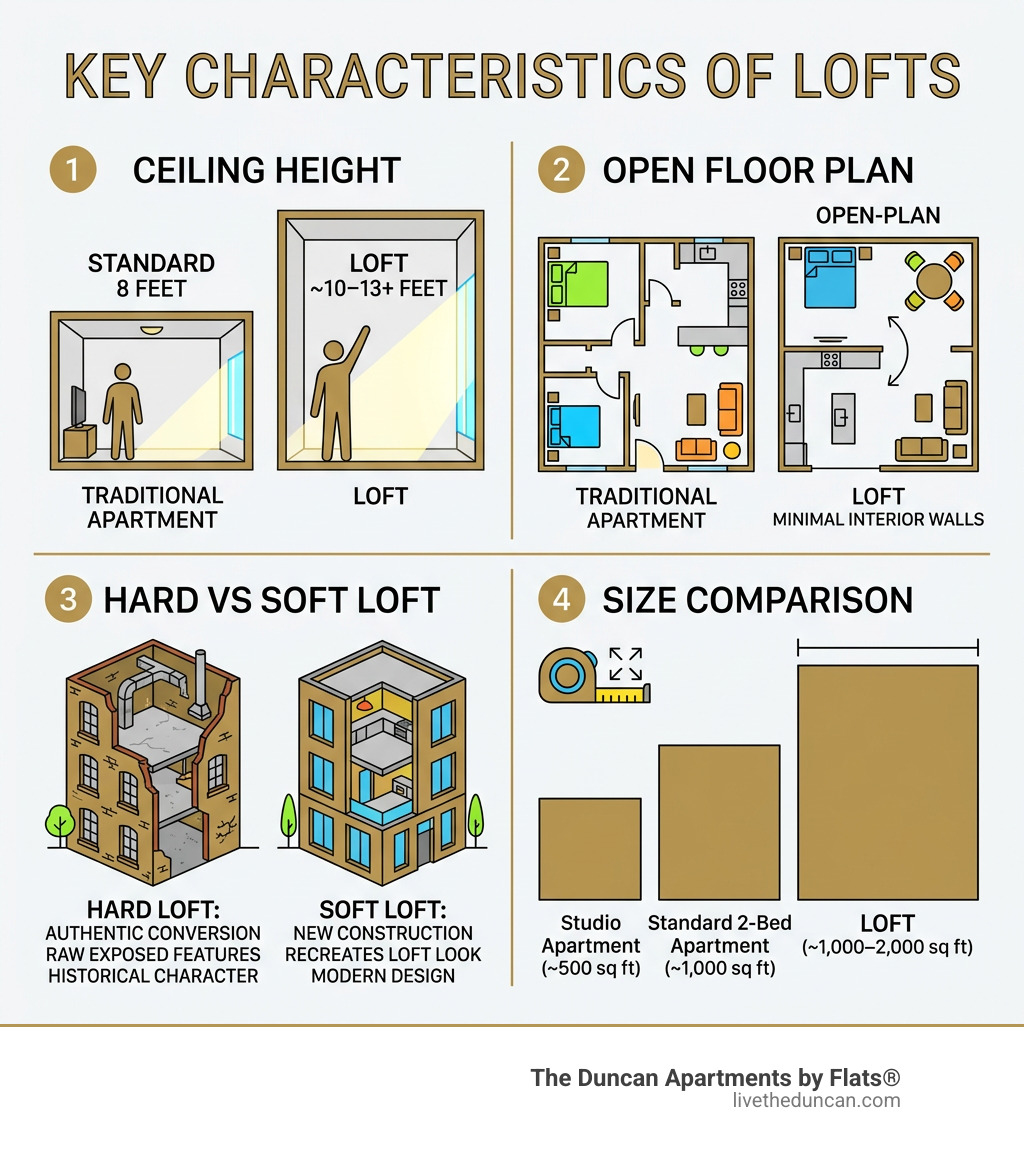
Lofts are large, open-plan living spaces known for high ceilings, minimal interior walls, and industrial-inspired details like exposed beams, concrete floors, and oversized windows.
Here's a quick snapshot of what defines a loft:
| Feature | Loft Apartment | Traditional Apartment |
|---|---|---|
| Floor plan | Open, minimal walls | Divided rooms |
| Ceiling height | ~10–13+ feet | Standard 8 feet |
| Size | ~1,000–2,000 sq ft | Varies widely |
| Aesthetic | Industrial or modern | Conventional |
| Origin | Often converted warehouses | Purpose-built residential |
There are two main types to know:
- Hard lofts - Authentic conversions from warehouses or industrial buildings, with raw exposed features intact
- Soft lofts - New construction that recreates the loft look with high ceilings and open layouts, but without the industrial history
Lofts first appeared when artists in cities like New York began converting abandoned warehouses into live-work studios. What started as a practical solution for creative space eventually became one of the most sought-after urban living styles in North America.
Today, loft-style living appeals to urban dwellers who want more space, more light, and more character than a conventional apartment offers.
The Evolution and History of Lofts
The story of the lofts we love today begins far from luxury residential real estate. The word itself finds its roots in the Old Norse word lopt, which literally translates to "air" or an elevated space. Historically, a loft referred to the upper story of a building, often directly under the roof, used for storage in barns or industrial workshops.
In the mid-20th century, particularly in cities like New York and Paris, a shift occurred. As manufacturing moved out of city centers, massive warehouses and factories were left abandoned. These buildings featured high ceilings, enormous windows designed to let in light for factory workers, and vast, unobstructed floor plates.
Artists were the first to see the potential in these "hard" industrial spaces. In neighborhoods like SoHo in Manhattan or the Near West Side of Chicago, painters and sculptors began moving into these former printing presses and textile mills. They needed the square footage for their large-scale works and the natural light that only 12-foot windows could provide. This movement was famously documented in works like Loft living: culture and capital in urban change, which explores how these artistic enclaves eventually sparked broader urban renewal and gentrification.
What was once a gritty, utilitarian necessity for the creative class eventually caught the eye of the wider public. Developers began to see that the "industrial chic" aesthetic—exposed brick, visible ductwork, and open timber beams—represented a sophisticated, modern way of living. This led to the birth of the "soft loft," where new buildings were designed from the ground up to mimic the airy, expansive feel of those original warehouse conversions.
Defining Characteristics: Hard Lofts vs. Soft Lofts
When you are searching for loft style apartments, you will quickly notice that not all lofts are created equal. The market generally splits into two categories: "Hard" and "Soft."
Hard Lofts: The Authentic Industrial Soul

A hard loft is a true conversion. These are buildings that had a previous life as something else—perhaps a cold storage warehouse, a garment factory, or a paper mill. Because they weren't originally built for people to live in, they possess a raw, honest character that is hard to replicate. Key features include:
- Exposed Elements: You will see original brick walls, heavy timber beams, or poured concrete pillars.
- Industrial Infrastructure: Exposed heating ducts, electrical conduits, and water pipes are often left visible as a design choice.
- History: These units often have unique "quirks," such as original loading docks repurposed into balconies or old freight elevator shafts integrated into the floor plan.
Soft Lofts: Modern Comfort with an Open Feel
Soft lofts are purpose-built residential buildings. They offer the aesthetic of a loft—high ceilings and open floor plans—but with the modern conveniences of a standard apartment. While they might lack the 100-year-old brick, they make up for it with:
- Better Insulation: Newer windows and walls mean more consistent temperatures.
- Modern Amenities: You are more likely to find central air conditioning, updated gyms, and dedicated storage lockers.
- Uniformity: The layouts are often more predictable and "user-friendly" for those who want the loft look without the industrial maintenance.
Living in an Open Space: Pros, Cons, and Lifestyle Benefits
Living in lofts is a deliberate lifestyle choice. It is about trading the traditional "room-by-room" layout for a sense of total freedom. However, that freedom comes with its own set of considerations.
The Bright Side of Loft Living
The most immediate benefit is the sense of volume. While a standard apartment might feel cramped at 800 square feet, a loft with 13-foot ceilings feels palatial. The oversized windows common in these buildings flood the space with natural light, which can have a significant positive impact on your mood and productivity.
Furthermore, the lack of walls means you can truly customize your home. Your "living room" can be as large or as small as you want it to be. For urban professionals who work from home, the open layout makes it easy to create a distinct office zone without feeling tucked away in a dark corner.
Things to Consider
On the flip side, "open" also means "audible." Without walls to dampen sound, a television in the living area will be heard clearly in the sleeping area. Temperature regulation is another factor; maintaining comfort in a space with 15-foot ceilings and giant windows requires more effort than a standard "box" apartment. Additionally, traditional storage (like hallway closets) is often scarce, requiring residents to get creative with their organization.
| The Loft Lifestyle | What to Expect |
|---|---|
| Natural Light | Abundant; great for plants and photography. |
| Customization | Total; you define where the "rooms" are. |
| Sound Travel | High; open spaces echo more than divided ones. |
| Privacy | Limited; best for singles or very close couples. |
| Storage | Creative; you'll likely need wardrobes or trunks. |
Designing and Organizing Open Concept Lofts
Decorating lofts requires a different strategy than a traditional home. When your bedroom, kitchen, and living room are all in one giant rectangle, the goal is to create "zones" without blocking the flow of light and air.
Use Area Rugs to Anchor Zones
Rugs are the "walls" of a loft. A large jute rug can define the dining area, while a plush wool rug anchors the seating area. This creates a visual boundary that tells the eye where one "room" ends and another begins.
Embrace Vertical Storage
Since you have 10 to 15 feet of vertical space but limited closet doors, go up! Tall bookshelves that reach toward the ceiling not only provide massive amounts of storage but also draw the eye upward, emphasizing the height of the space. Open shelving in the kitchen area can also maintain that industrial, airy feel while keeping essentials within reach.
Strategic Lighting
In a traditional apartment, you have one overhead light per room. In a loft, you need "lighting layers." Use floor lamps to create a cozy reading nook, pendant lights to highlight the kitchen island, and perhaps some track lighting to wash the original brick walls in a warm glow.
For more detailed tips on managing these unique spaces, check out our loft apartment ultimate guide.
Market Trends and Choosing Your Urban Space
As we look toward the future, the demand for lofts remains high, especially in vibrant urban centers like Chicago's West Loop. The trend is moving toward "amenity-rich" loft living. While the original 1970s loft dwellers were happy just to have a roof and a toilet, today’s residents want the historic charm of a warehouse combined with a rooftop lounge and an indoor pool.
When choosing your space, consider the "Walk Score." Most authentic lofts are located in former industrial districts that have since become the city's trendiest hubs for dining and nightlife. For instance, living in the West Loop puts you within walking distance of some of the best restaurants in the world, making the "urban" part of the loft lifestyle just as important as the apartment itself.
If you are currently researching your options, our West Loop loft apartments guide 2025 provides a deep dive into what to look for in the current market, from square footage expectations to the latest building features.
Frequently Asked Questions about Lofts
What is the difference between a loft and a studio?
While both can be open-concept, the main difference is scale and history. A studio is typically a small, purpose-built apartment (averaging 600 square feet) where the living, dining, and sleeping areas are combined. Lofts are much larger (often 1,000–2,000 square feet), feature much higher ceilings (10+ feet), and usually have an industrial pedigree or aesthetic that studios lack.
How does a mezzanine differ from a full loft apartment?
A mezzanine is a partial floor or an "elevated nook" that overlooks the main living area. You might find a mezzanine in a "loft-style" apartment, but a true loft apartment refers to the entire unit's architectural style—characterized by the open floor plan and high ceilings—rather than just a raised platform for a bed.
Are loft apartments suitable for families?
They can be! While the "open" nature of lofts is often associated with singles or professionals, many modern loft developments offer multi-bedroom options where the bedrooms are fully enclosed for privacy. The extra square footage and proximity to urban parks make them an interesting alternative to suburban living for modern families.
Conclusion
Whether you are drawn to the rugged history of a hard loft or the sleek, airy feel of a soft loft, there is no denying that this style of living offers a sense of character you just won't find in a standard building. It’s about more than just square footage; it’s about the volume of the space and the history within the walls.
At The Duncan, we offer a modern take on this lifestyle right in the heart of Chicago's West Loop. Our apartments combine the spacious, open feel you desire with the luxury amenities you deserve—including an indoor pool and a rooftop lounge with stunning city views. If you are ready to trade in your cramped quarters for high ceilings and urban vibes, find your next home with West Loop loft living and experience the best of Chicago living.


