


When evaluating a 1 bed 1 bath apartment pet friendly floor plan, understanding the full rental expense structure helps create a seamless move-in process. Leasing agreements for pet-friendly properties combine several standard monthly and one-time components that prospective tenants should review before committing to a lease agreement.
Base rent covers the living space itself, while pet-specific charges account for administrative oversight, routine building maintenance, and regular access to specialized community amenities. Evaluating these individual items together gives a comprehensive view of total monthly obligations, allowing renters to establish clear expectations throughout their lease term.
Pet-related charges vary by property and may be influenced by the number of approved pets, screening requirements, amenity offerings, and building policies. A one-bedroom apartment can be an efficient home for a resident and pet when the floor plan includes practical storage, resilient finishes, and enough open living area for everyday routines. Reviewing both the apartment layout and the full lease fee schedule helps clarify what is due at application, move-in, and each month after occupancy begins.
Average Lease Expenses for a 1 Bed 1 Bath Apartment Pet Friendly
In vibrant urban locations like Chicago's West Loop, floor plans for a one-bedroom, one-bathroom unit typically feature optimized square footage ranging from open layout designs to expansive layouts with dedicated work-from-home nooks. Determining how living spaces accommodate both personal lifestyle requirements and animal care accessories is an essential step during initial property evaluation.
When searching for a Pet Friendly Apartment for Rent, comparing base rent against recurring building fees provides complete rental clarity. Monthly pet rent is calculated on a per-pet basis and directly supports shared community features such as enclosed dog runs, climate-controlled pet washing stations, and landscaped outdoor courtyards. Understanding these recurring line items prevents unexpected expenses during the leasing period.
Renters should also review whether utilities, internet service, parking, storage, trash service, or amenity charges are billed separately from base rent. These items may not be pet-specific, but they still affect the total monthly payment structure listed in the lease package. Asking the leasing office for a complete fee summary before signing makes it easier to compare floor plans within the same community and understand what each apartment includes.
| Fee Component | Frequency | Purpose |
|---|---|---|
| Base Rent | Monthly | Primary dwelling access and unit square footage |
| Pet Rent | Monthly | Ongoing pet amenity maintenance and access |
| Security / Move-In Fee | Upfront | General property protection and administration |
| Pet Deposit / Pet Fee | Upfront | Administrative pet onboarding and property preparation |
Expense Breakdown: Pet Deposits vs. Monthly Rent
Upfront expenses often include security deposits or administrative move-in fees along with a dedicated pet deposit or non-refundable pet fee. Property management groups frequently apply upfront pet fees toward common space maintenance, pet waste station supplies, and initial unit preparation.
Many modern apartment communities utilize standardized third-party screening platforms during the application process to evaluate household pets. These evaluation portals verify mandatory vaccination records, licensing credentials, and behavioral profiles. Tiered monthly pet rent programs determine ongoing rates based on individual pet profiles. Standard community guidelines typically allow up to a maximum limit of two pets per residence. Establishing these operational details before finalizing lease paperwork ensures complete transparency throughout the lease term.
It is also helpful to confirm whether pet deposits are refundable, partially refundable, or non-refundable under the lease terms. A pet addendum should explain how fees are charged, when they are due, and what resident responsibilities apply if pet-related damage occurs inside the apartment or in common areas. Keeping copies of screening approvals, vaccination records, and lease addendums in one place can simplify future renewals and any administrative updates during residency.
How to Find a 1 Bed 1 Bath Apartment Pet Friendly
Finding an ideal one-bedroom home requires leveraging digital rental search engines equipped with specific filters. Setting granular filters for bedroom count, bathroom count, specific square footage ranges, and clear pet policies narrows down available inventory effectively, making the apartment search more organized.

Virtual tours, high-resolution photo galleries, and interactive 3D walkthroughs allow prospective residents to inspect layout flow, floor materials, lighting quality, and window placement before scheduling an in-person visit. Interactive visual tours help evaluate whether a specific layout provides adequate floor space for pet essentials like scratching posts, crates, and feeding stations.
A practical search process starts with confirming which buildings clearly publish pet policies, required documentation, and available pet-focused amenities. Listings that include floor plan measurements, closet dimensions, and in-unit laundry details can make it easier to understand how daily pet care will fit into the apartment. For a one-bedroom layout, details such as entryway width, balcony or window placement where applicable, and living room proportions can influence where pet beds, food bowls, litter boxes, or toy storage will be placed.
Prospective residents can also prepare questions before contacting a leasing office. Useful topics include pet screening timelines, required records, monthly pet rent, upfront pet fees, elevator and hallway expectations, outdoor relief areas, and amenity access rules. Clear answers to these questions help create a smoother transition from apartment search to application review.
Verifying Pet Rules and Breed Restrictions
Before submitting an application fee or reservation deposit, reviewing specific building pet policies is essential. Most apartment communities enforce explicit guidelines concerning animal size, weight caps, and designated breed restrictions to ensure a balanced community atmosphere.
Understanding local Apartment Breed Restrictions helps set realistic expectations during the property search. Leasing offices usually limit occupancy to two pets per apartment, ensuring a comfortable environment for both neighbors and animals within the property. Reviewing documentation rules, vaccination requirements, and spay/neuter verification forms in advance streamlines application processing.
Pet rules should be reviewed in writing rather than assumed from a listing summary. Some communities require annual documentation updates, while others may require screening approval before a lease can be generated. Breed, weight, and behavior guidelines may differ by property, so confirming details directly with the leasing team helps prevent delays. Residents with Assistance Animals or Emotional Support Animals should follow the property process for submitting accommodation documentation during the application stage.
Neighborhood Amenities and Pet Perks
A well-located apartment community enhances daily life with conveniently located amenities. Properties featuring on-site dog runs, private courtyards, and dedicated indoor grooming spaces allow residents to care for their pets without leaving the premises. Seeking out Apartments with Pet Wash stations makes post-walk cleanups simple during cold or rainy seasons.
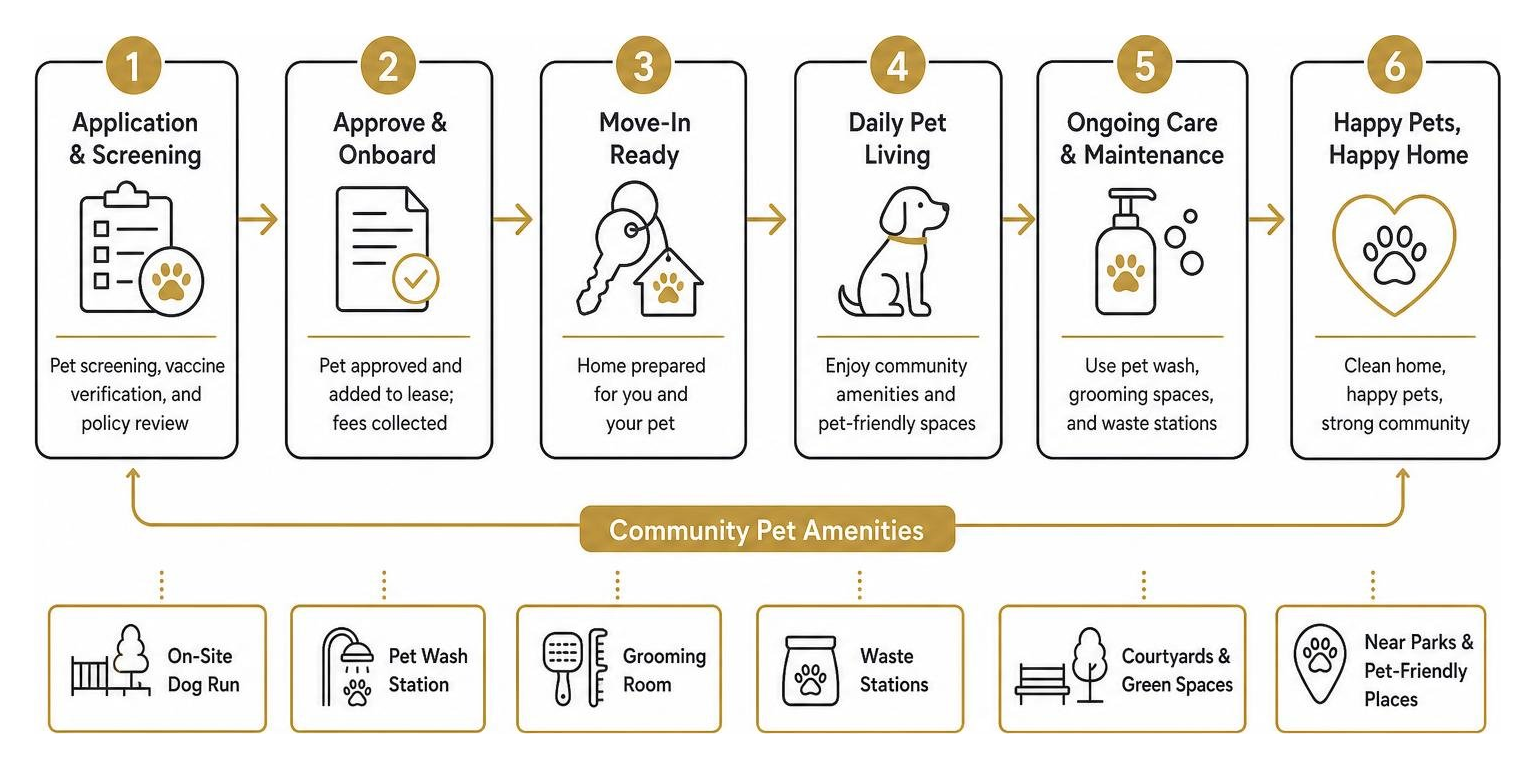
Neighborhood surroundings are equally important when choosing a long-term home. Proximity to public parks, multi-use walking trails, veterinary clinics, specialty pet stores, and pet-friendly outdoor dining spots creates a balanced lifestyle for city dwellers and their companion animals.
For residents considering Chicago's West Loop, access to sidewalks, nearby green space, and everyday services can shape the convenience of pet ownership. A building with thoughtful on-site amenities may reduce the need to travel for routine grooming or quick outdoor breaks, while nearby services can support veterinary appointments, pet supply runs, and daily walks. Evaluating both the apartment community and the surrounding neighborhood gives a fuller picture of day-to-day living with a pet.
Key Lease Terms and Policy Guidelines for Pet Owners
A thorough review of lease documentation protects both the resident and the property management company. Pet addendums outline essential rules regarding noise standards, leash requirements in common hallways and elevators, and mandatory waste disposal protocols.

Lease agreements normally specify damage liability clauses, detailing resident responsibility for any interior unit repairs beyond normal wear and tear. Carrying renters insurance with dedicated personal liability coverage for pets is a standard requirement across modern residential buildings. For individuals requesting accommodation for Assistance Animals or Emotional Support Animals (ESAs), verification documentation should be submitted during pre-lease application screening in accordance with federal regulations outlined by the Fair Housing Act.
Pet addendums may also identify designated pet relief areas, elevator etiquette, hallway rules, amenity access expectations, and procedures for reporting maintenance concerns related to pets. Residents should review whether the lease requires pets to be supervised in shared areas, whether pet waste stations are available on site, and how property management handles updates to pet records during the lease term. These rules help clarify expectations for residents, neighbors, guests, and building staff.
Essential Features in a 1 Bed 1 Bath Apartment Pet Friendly
The internal floor plan layout dictates day-to-day functional comfort. When exploring Pet Friendly Apts for Rent Near Me, prioritizing specific interior features makes daily living with a pet practical and comfortable:
- Durable Flooring: Luxury vinyl plank, engineered hardwood, or tile flooring handles active paws, resists scratch marks, and cleans quickly after spills.
- Layout Optimization: Open-concept living rooms allow open space for pet beds, crates, and interactive play setups without blocking entryways or primary walkways.
- In-Unit Laundry: Integrated full-sized washers and dryers streamline cleaning pet bedding, towels, and protective furniture covers.
- Storage Options: Ample closet space and built-in shelving keep pet food containers, toys, grooming supplies, and leashes organized and out of view.
Additional apartment features can further support an organized pet routine. A defined entryway creates a convenient place for leashes, towels, and waste bags. A kitchen with durable surfaces makes feeding areas easier to maintain. Good natural light can make the living area more pleasant for both residents and pets throughout the day. In a one-bedroom apartment, furniture placement is especially important because the same open area may need to support relaxing, working from home, dining, and pet care.
Lease Qualification and Rent-to-Income Guidelines
Standard real estate asset management practices often use rent-to-income benchmarks during application review. When calculating monthly obligations, factoring base rent, monthly pet fees, utilities, storage rentals, and parking fees into a comprehensive lease review helps residents understand the full payment schedule before signing.
Many leasing teams provide applicants with a list of required documents, income verification standards, screening steps, and move-in deadlines. Reviewing those requirements early can make the application process more efficient. For pet owners, the application may include both household screening and pet screening, so it is useful to gather identification, vaccination records, licensing information, and any required pet profile details before submitting the application. A complete file helps leasing staff process the application without unnecessary back-and-forth requests.
Frequently Asked Questions
What factors should be evaluated when reviewing a 1-bedroom pet-friendly apartment?
Selecting a one-bedroom pet-friendly unit involves evaluating layout dimensions, building age, and included community amenities. Prospective residents should review the full schedule of monthly obligations, including pet rent, utility arrangements, parking access, storage options, and building amenity structures. The leasing office can provide details for specific apartment homes in neighborhoods like Chicago's West Loop.
What common restrictions apply to pets in apartments?
Apartment communities typically establish clear policies regarding maximum pet allowances, enforcing a strict two-pet limit per apartment. Additional regulations often involve specific breed restrictions, weight limitations, mandatory third-party pet screening evaluations, and mandatory up-to-date vaccination records prior to move-in approval.
Some properties may also require city licensing records, photos, pet profile updates, or proof of spay/neuter status. Rules can apply to common areas as well as the apartment home, including leash requirements, elevator use, waste disposal, and access to amenities such as dog runs or pet wash stations. Reviewing the pet addendum before signing ensures that expectations are understood at the start of the lease.
How do monthly pet rents and pet deposits work?
Upfront pet deposits or administrative fees cover initial onboarding, account setup, and common area upkeep upon move-in. Recurring monthly pet rent is collected alongside standard monthly rent payments to support ongoing property maintenance, specialized pet sanitation tools, and dedicated community pet facilities.
Pet deposits and pet fees are not always treated the same way. A deposit may be refundable under certain lease conditions, while a fee may be non-refundable. The lease or pet addendum should identify which charges apply, when they are due, and whether any portion can be returned after move-out. Residents should also confirm whether monthly pet rent is charged per approved pet and whether updated screening is required at renewal.
Conclusion
Searching for a 1 bed 1 bath apartment pet friendly floor plan involves evaluating total lease terms, reviewing specific community pet guidelines, and assessing property amenities. Selecting a residential community with resilient interior finishes, functional layout space, and dedicated pet care facilities ensures a welcoming living experience for all household members.
A complete apartment search should include a review of floor plan dimensions, pet screening requirements, monthly pet rent, upfront pet fees, breed and weight policies, renters insurance requirements, and the availability of amenities such as dog runs or pet wash stations. It is also useful to confirm neighborhood conveniences, including walking routes, veterinary offices, pet supply stores, and nearby outdoor areas that support daily routines.
At The Duncan in Chicago's West Loop, modern one-bedroom apartments are paired with exceptional community features, including a rooftop lounge, indoor swimming pool, fitness center, and pet-friendly facilities. Explore the comprehensive Pet Friendly Apartments Guide 2026 and consult the detailed Pet Friendly Apartments Chicago Guide to find ideal rental opportunities today.


