


Find Animal Friendly Apartments That Work for You and Your Pet
Animal friendly apartments are rentals that allow pets, but every property can set its own rules for pet types, pet limits, fees, breed or weight restrictions, and required documents. The fastest way to find a good match is to filter verified rental listings, then confirm the full pet policy with the leasing team before applying.
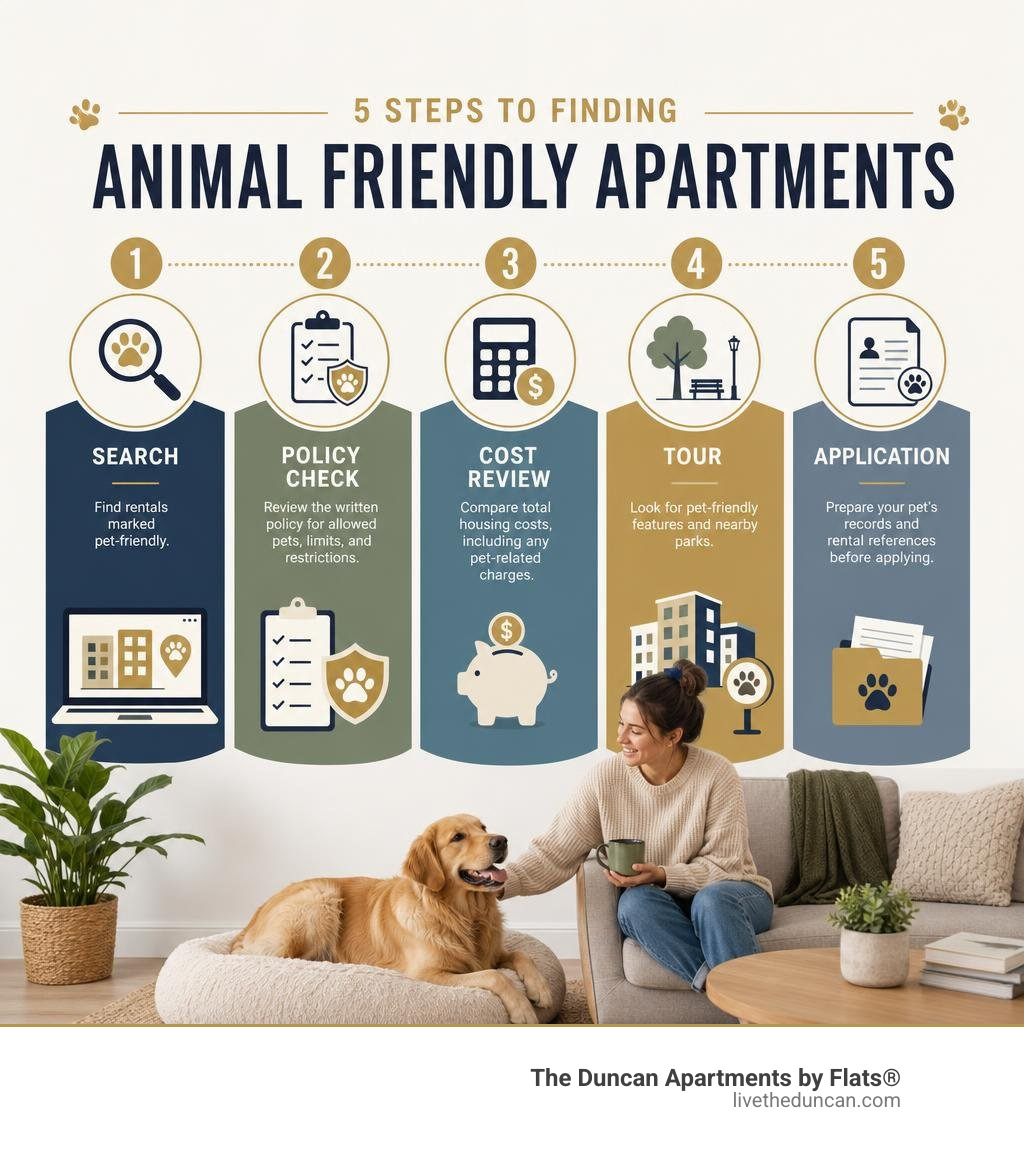
- Search for rentals marked dog-friendly, cat-friendly, or pet-friendly.
- Check the written policy for allowed animals, limits, and restrictions.
- Compare pet policies, including any pet-related charges.
- Look for practical features such as pet wash areas, dog runs, and nearby parks.
- Prepare your pet's records and prior rental references before submitting an application.
A "pet-friendly" label is a starting point, not a full policy. Some communities welcome cats but have limits for dogs. Others allow larger dogs but restrict certain breeds, while a few have no weight limit at all. Amenities also vary widely, from a simple relief area to on-site dog parks and pet washing stations.
For renters balancing work, errands, and city life, the right apartment can make daily pet care much easier. This guide explains how to compare options, ask useful questions, and move forward with fewer surprises.
Decoding the Policies of Animal Friendly Apartments
When selecting a new home, pet owners must evaluate property terms beyond standard move-in requirements. Managing lease expectations requires reading agreements carefully before signing. Landlord policies regarding pets can vary significantly between properties, making it vital to ask for a full written schedule of pet-related terms during initial discussions.
Understanding how pet policies are structured helps ensure a smooth transition. Many management companies establish multi-tiered fee frameworks to offset routine wear and tear or manage property upkeep. Knowing the distinction between each fee structure avoids unexpected surprises at move-in.
Pet Deposit vs. Pet Fee vs. Pet Rent Breakdown
Pet policies generally fall into three distinct categories: deposits, fees, and monthly rent. Understanding these terms ensures renters know which payments are refundable and which represent fixed housing arrangements.
- Pet Deposit: A refundable security payment held by the landlord throughout the tenancy. This sum covers potential physical damage to flooring, walls, or trim caused by an animal. If the apartment is returned in good condition at move-out, minus standard wear and tear, this money is refunded.
- Pet Fee: A one-time, non-refundable payment charged prior to occupancy. Unlike a deposit, a pet fee is an administrative fee that will not be returned at the end of the lease, regardless of unit condition.
- Pet Rent: An ongoing monthly surcharge added to base monthly rent. This recurring fee offsets daily operations and community maintenance, such as waste disposal stations and landscaping upkeep.
Landlord-tenant regulations govern how deposits and administrative fees are collected. For instance, state laws often establish guidelines on allowable security limits and handling procedures. Reviewing specific local ordinances and exploring flexible pet-friendly rental options allows residents to plan their move effectively.
Navigating Pet Breed and Weight Restrictions
Apartment communities frequently implement guidelines based on breed profiles, weight caps, or pet counts (typically capping occupancy at two pets per household). These rules are often influenced by property liability insurance policies rather than individual animal behavior.
Insurance providers often maintain specific lists of restricted breeds based on perceived temperament and liability risk. Common breed restrictions in residential properties include:
- Pit Bull Terriers and Staffordshire Terriers
- Doberman Pinschers
- Rottweilers
- German Shepherds
- Chow Chows and Akitas
Weight caps may also be enforced, limiting animals to specific size thresholds. However, modern communities increasingly adopt behavior-based screening rather than strict weight limitations. Prospective residents evaluating communities with dog restrictions can learn more about navigating apartment breed restrictions and options for apartments that welcome German Shepherds by reviewing dedicated community guidelines.
Step-by-Step Application Checklist for Renters
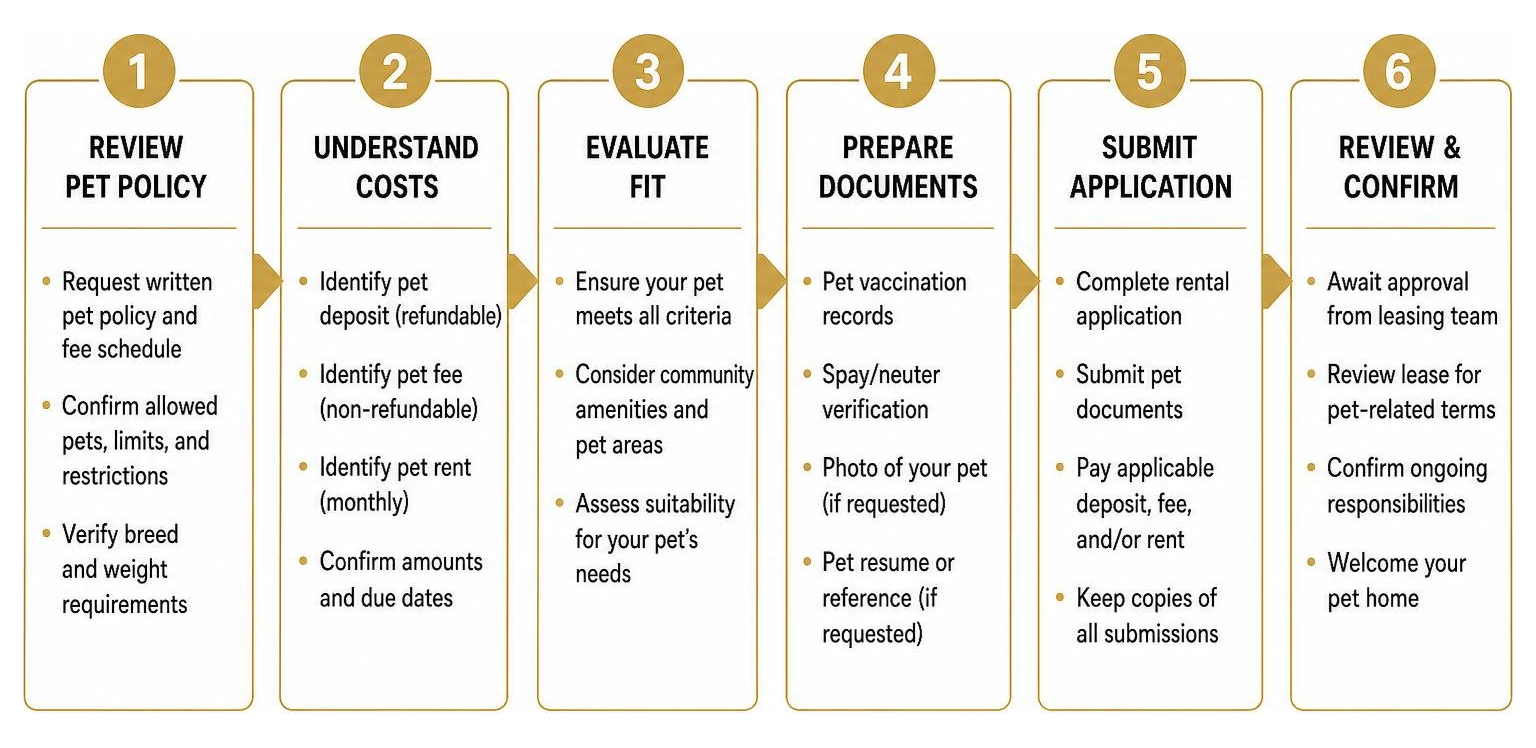
Securing approval for animal friendly apartments requires demonstrating responsible ownership. Presenting organized documentation upfront shows leasing staff that your companion animal is well-mannered, healthy, and accustomed to apartment living.
Building a Resume for Animal Friendly Apartments
A pet resume presents your pet's credentials clearly to property managers. Compiling complete records alleviates potential concerns regarding noise, property damage, or safety.
A comprehensive pet portfolio should include:
- Basic Profile: A clear photo, pet name, age, breed, and weight.
- Health Records: Documentation confirming current vaccinations (such as rabies and distemper) alongside official spay or neuter verification.
- Identification: Microchip registration details and local licensing numbers.
- Training Certifications: Evidence of completed obedience classes or formal recognitions like the AKC Canine Good Citizen (CGC) certificate.
- References: Written recommendations from past landlords, neighbors, or property managers verifying good behavior and quiet enjoyment.
Including these materials when applying for a pet-friendly apartment rental helps establish trust with management right from the start.
Essential Questions to Ask During Your Apartment Tour
In-person or virtual tours offer an opportunity to review property policies and ensure community features align with your daily routine. Asking targeted questions helps prevent misunderstandings after move-in.
Key questions to ask leasing agents include:
- Property Access Policies: How does maintenance staff manage service requests when animals are inside the home?
- Designated Relief Spaces: Are on-site dog walking areas, relief stations, or green spaces provided?
- Noise Guidelines: What are the property rules regarding casual pet noise or daytime vocalizations?
- Community Limits: Does the community enforce a strict two-pet maximum per residence?
- Local Amenities: Are nearby public parks or walking paths easily accessible?
Gathering these details during your walkthrough ensures the neighborhood fits your lifestyle. For additional tips on exploring urban communities, check out this guide on downtown Chicago dog-friendly apartments.
Must-Have Amenities in Pet-Friendly Rental Communities
Modern apartment developments offer dedicated amenities designed to enhance convenience for both pets and their owners. Access to on-site infrastructure simplifies daily exercise, grooming, and play routines.
On-Site Pet Amenities and Green Spaces
Property features range from basic outdoor relief areas to specialized wellness facilities. Evaluating these conveniences helps renters choose an apartment that suits their lifestyle.
| Feature Category | Standard Pet Offerings | Modern Specialized Amenities |
|---|---|---|
| Grooming & Care | Outdoor Hose / Utility Sink | On-Site Pet Spa & Wash Station |
| Exercise & Play | Designated Leashed Green Area | Fenced Off-Leash Dog Park with Agility Tools |
| Convenience | Outdoor Waste Stations | Dedicated Relief Turf & Private Balcony Spaces |
| Community | Pet Welcome Treats in Lobby | Community Dog Gatherings & Social Hours |
Facilities like dedicated pet wash areas allow residents to clean muddy paws before entering common corridors, keeping living spaces clean. Renters interested in these features can explore apartments with pet wash stations and residences offering pet-friendly indoor pools for a comfortable urban lifestyle.
Key Resources to Find Animal Friendly Apartments
Using verified listing tools streamlines your search for rental housing. Specialized platforms offer detailed filter options for animal-related rules, fees, and amenity preferences:
- RentCafé: Aggregates verified manager listings, reducing exposure to fraudulent postings.
- Zillow & Trulia: Feature dedicated filters for cat-friendly and dog-friendly rentals.
- PadMapper: Monitors an extensive database of rental properties across urban markets.
- Apartment List: Outlines specific management policies, including pet rent and deposit rules.
- Zumper: Provides streamlined application capabilities and real-time listing updates.
When searching for new listings, checking verified portals for pet-friendly apartments near me and local animal friendly apartments near me helps locate properties that match your specific criteria.
Regional Availability and Legal Protections for Renters

Understanding market trends and legal rights helps renters evaluate available options and protect their housing status.
Comparative Rental Availability Across US Cities
Pet-friendly rental inventory varies by urban market based on regional infrastructure, housing density, and local demand. Major metropolitan areas display distinct rental availability figures:
- Los Angeles, CA: Features over 17,070 pet-friendly apartment options spanning diverse neighborhood settings.
- Houston, TX: Displays substantial inventory with over 20,048 pet-welcome rentals available across various unit configurations.
- Jacksonville, FL: Features approximately 11,230 pet-friendly listings, including 4,151 one-bedroom, 4,677 two-bedroom, 1,862 three-bedroom, and 251 studio units, alongside 847 single-family houses, 394 townhomes, and 298 condos for rent.
- Staten Island, NY: Represents a tight rental market with around 66 pet-friendly listings available.
For residents looking at Midwestern urban centers, exploring Chicago pet friendly rentals reveals a robust selection of high-rise and boutique properties equipped with dedicated pet amenities.
Fair Housing Act: Service Animals and ESA Rights
Federal laws differentiate standard household pets from assistance animals. Under the federal Fair Housing Act (FHA), assistance animals - which include trained service animals and emotional support animals (ESAs) - are classified as legal accommodations for individuals with qualifying disabilities rather than pets. Renters can review HUD's assistance animal guidance for additional information about reasonable accommodation requests in housing.
Key legal protections under the Fair Housing Act include:
- Exemption from Pet Fees: Housing providers cannot charge pet deposits, pet fees, or monthly pet rent for documented assistance animals.
- Bypass of Restrictions: Assistance animals are exempt from community breed, weight, and size limits.
- Accommodation Requests: Tenants may request reasonable accommodations by providing valid documentation from a licensed healthcare professional confirming the need for the assistance animal.
- Behavioral Standards: Property managers retain the right to request the removal of any animal - including assistance animals - that poses a direct health or safety threat or causes substantial physical damage to the premises.
Understanding these legal rights helps ensure equal access to housing while protecting animal and tenant welfare.
Frequently Asked Questions About Renting with Pets
What is the main difference between a pet fee, deposit, and pet rent?
A pet deposit is a refundable payment set aside for potential damage, returned if the unit is left in good condition. A pet fee is a non-refundable upfront payment that covers administrative handling. Pet rent is an ongoing monthly charge added to base rent that offsets standard community maintenance and pet amenity usage.
Can landlords legally impose breed or weight restrictions on pets?
Yes. Property owners and management companies may establish rules regarding pet species, weight caps, breed classifications, and maximum pet counts (such as a two-pet limit per household). These rules are usually governed by liability insurance conditions or property management guidelines. However, valid assistance animals under the Fair Housing Act are exempt from these restrictions.
How do service animals and emotional support animals differ from regular pets?
Service animals are individually trained to perform specific tasks for individuals with disabilities, whereas emotional support animals (ESAs) provide therapeutic comfort. Under federal fair housing guidelines, neither service animals nor ESAs are considered pets. Consequently, they are exempt from pet fees, deposits, and breed or weight limits, provided proper documentation is submitted.
Conclusion
Finding the right home for you and your companion animal comes down to research, preparation, and clear communication. By understanding pet fee structures, compiling a complete pet resume, asking targeted questions during property tours, and verifying local rules, you can secure an ideal apartment with confidence.
At The Duncan Apartments by Flats®, renters find modern, stylish living in Chicago's West Loop. Featuring well-designed floor plans and upscale amenities—including an indoor pool, rooftop lounge, and pet-welcoming spaces—the community combines everyday comfort with convenient access to top city attractions. Explore this Chicago pet-friendly apartments guide to learn more today.


