


When searching for a new home, many dog owners quickly run into confusing rules regarding four-legged family members. Understanding how property managers handle pet policies makes the rental search much easier. While many communities advertise themselves as animal-friendly, their fine print often tells a different story.
Restricted breed lists and weight caps are common hurdles across standard lease agreements. Property policies often single out specific breeds like Pit Bulls, Rottweilers, German Shepherds, Doberman Pinschers, Chows, Akitas, and Huskies. Knowing the difference between a property that simply permits pets and one that offers true housing inclusivity helps avoid surprises during the application process. Understanding these nuances early in your search saves valuable time and minimizes application stress. For deeper insight into these rules, check out this resource on apartment breed restrictions to see how policies vary.
Why Property Managers Enforce Breed Bans
The primary driver behind rental breed bans is liability management and insurance underwriting. Many commercial real estate insurance policies include specific exclusions for certain dog breeds. If a property management company carries a master insurance policy that penalizes or refuses coverage for specific dogs, the property usually passes those limitations directly onto residents. This administrative approach often stems from traditional risk models rather than updated behavioral assessments.
Beyond insurance constraints, property managers often cite risk management and community noise concerns when maintaining weight caps or restricted lists. However, forward-thinking residential communities are shifting away from these broad rules. Instead of judging pets by appearance or breed, modern communities focus on individual pet behavior, responsible ownership, and progressive property management strategies. Evaluating pets on an individual basis ensures a safer and more welcoming atmosphere for all residents. This shift in management philosophy creates a positive living environment where responsible owners and well-behaved pets are welcomed without unnecessary barriers. If you share your life with a larger companion, exploring options for apartments for rent that allow german shepherds can help you find housing options that accommodate your household.
Finding Apartments With No Breed Restrictions Across the U.S.
Locating apartments with no breed restrictions requires knowing where to look and using the right search strategies. While traditional apartment portals let you filter for "pet-friendly" units, these filters rarely distinguish between communities with strict breed bans and those with open policies. Taking the time to research specific property guidelines directly ensures that prospective residents avoid unexpected policy hurdles during the lease execution stage.

To locate truly open rental communities, pet owners can turn to specialized housing databases, crowdsourced registries, and shelter directories. Organizations dedicated to animal welfare often maintain directories of rental properties that welcome all dog breeds regardless of size or appearance. For example, local rescue groups and regional networks publish updated lists of inclusive housing options, such as the resources provided by Pet Friendly Housing - It's A Pittie Rescue. Combining regional databases with direct community outreach remains the most effective way to secure a welcoming home.
Key Amenities in Apartments With No Breed Restrictions
Communities that eliminate breed bans typically embrace a pet-focused lifestyle. Rather than treating pets as an afterthought, these communities design shared spaces to accommodate dogs of all sizes and energy levels.
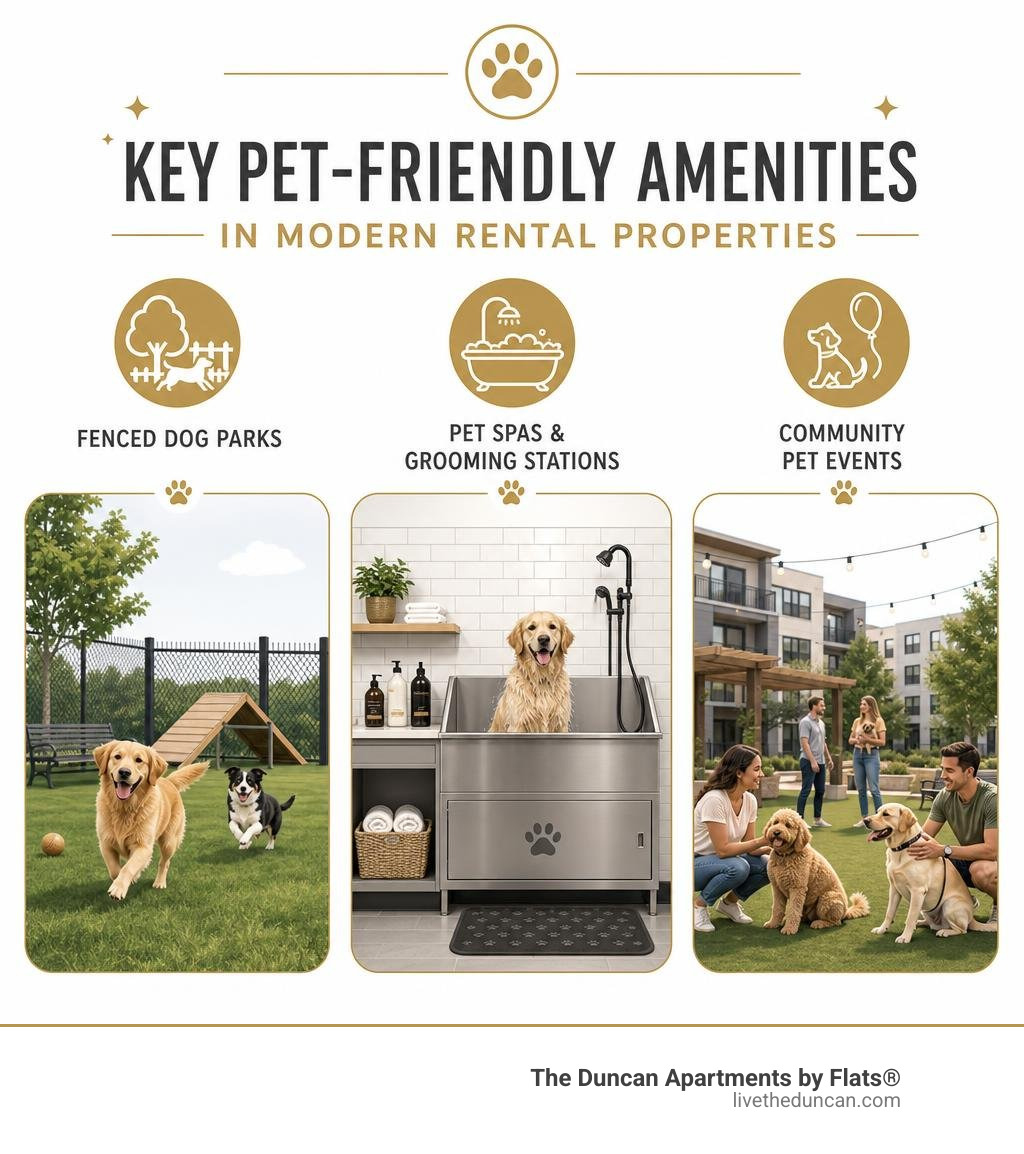
Common amenities found in pet-inclusive rental properties include:
- Fenced Dog Parks: Dedicated on-site spaces where dogs can exercise and socialize off-leash safely within the community grounds.
- Pet Spas and Grooming Stations: Professional-grade washing tubs and drying stations that make bath time convenient without cluttering your apartment bathroom.
- Community Pet Events: Social gatherings such as "Yappy Hours," holiday pet costume contests, and summer pool dips that help neighbors and their pets connect.
- Convenient Waste Stations: Well-stocked pet waste stations placed throughout green spaces to keep community grounds clean and pleasant for everyone.
Properties offering these features show a genuine commitment to creating a welcoming environment for pets and their owners. To learn more about living comfortably with larger pets, explore the guide on apartments that take large dogs.
Navigating Policy Exceptions and Exotic Pet Rules
Even when a property has no breed or weight restrictions for dogs, specific lease guidelines and animal regulations still apply:
- Pet Limits: Most inclusive apartment communities enforce a strict maximum limit of two pets per apartment home to ensure comfortable living spaces for all residents.
- Cat Policies: Progressive communities explicitly do not require cat declawing, recognizing it as an unnecessary procedure and promoting humane pet care.
- Small Caged Animals: Rules for caged pets like birds, hamsters, or fish vary. While these pets rarely require additional lease addendums, exotic animals such as ferrets or rabbits are frequently prohibited under standard residential leases.
- Location-Specific Rules: Property management groups with locations in different areas may maintain fully inclusive rules at most properties while applying minor variations at others due to local municipal regulations.
Always review the full lease agreement to ensure every member of your household is welcome.
Lease Policies, Guidelines, and Pet Screening
Renting with dogs involves specific administrative guidelines and community paperwork. Property management companies typically establish clear onboarding steps and lease agreements to maintain community amenities and shared spaces.
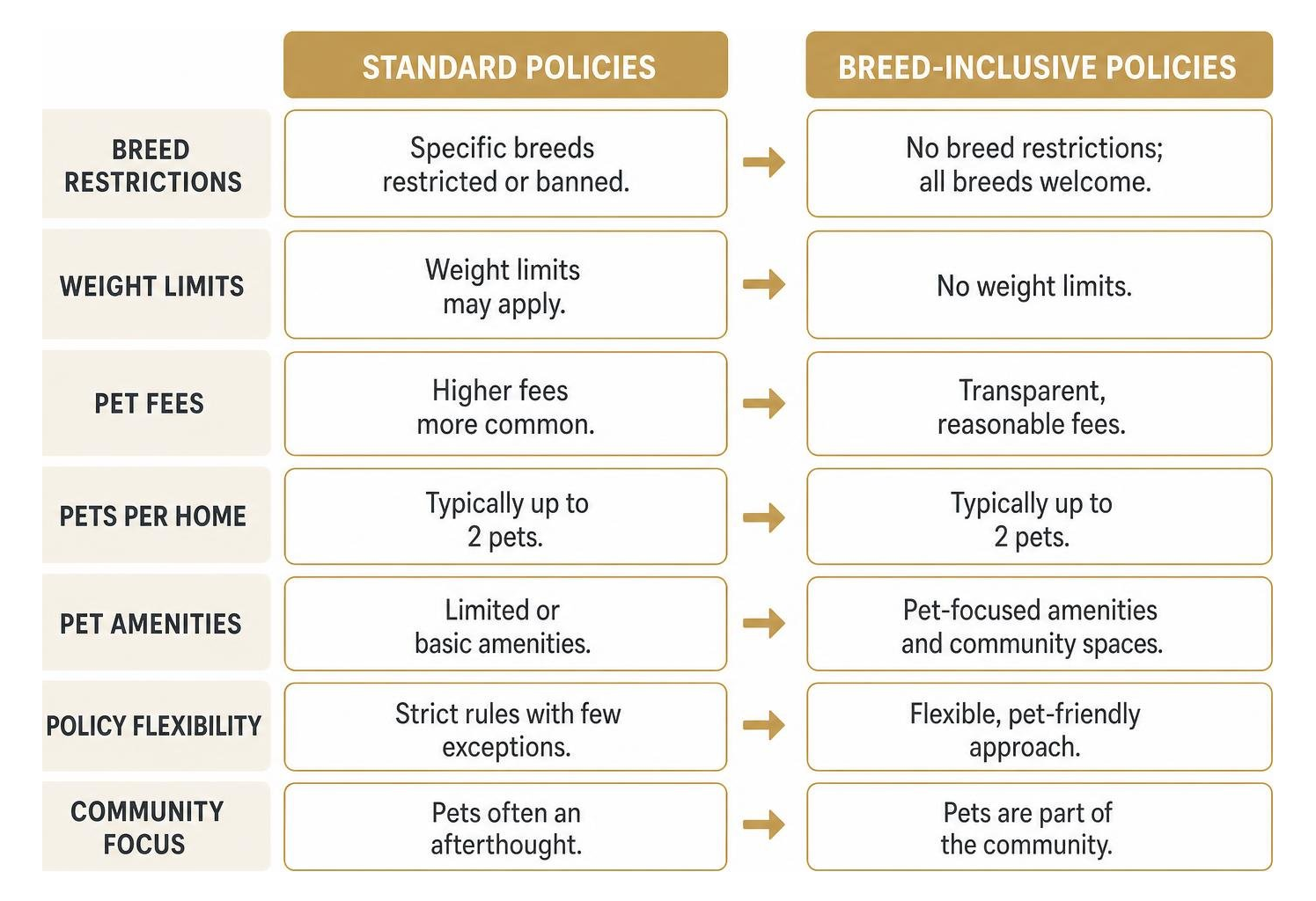
Standard pet administration guidelines across the rental industry generally include:
- Move-In Registration: Administrative onboarding to register your animal with community management prior to move-in.
- Pet Documentation: Up-to-date vaccination records and pet profiles maintained during your tenancy.
- Lease Agreements: Standard policy terms applied per animal, up to the standard two-pet limit, ensuring proper upkeep of shared pet amenities and grounds.
Understanding these requirements upfront helps you compare lease agreements clearly and plan for pet-related residency guidelines. For additional insights on aligning housing preferences with a pet's needs, read the overview of apartments that take large dogs.
How to Verify Policies at Apartments With No Breed Restrictions
Because property management guidelines and lease terms can change, verifying pet rules directly with the leasing team is an essential step before submitting an application.

To verify a property's current pet policy:
- Check Third-Party Screening Portals: Many modern apartment communities utilize third-party pet registration portals. These services collect vaccination records and general pet details during the application process.
- Review the Written Lease: Never rely solely on verbal assurances or marketing brochures. Confirm that the written lease explicitly states that there are no breed or weight bans.
- Inquire About Specific Exceptions: Ask directly if the community enforces any location-specific exclusions or pet height/weight caps.
- Confirm the Pet Limit: Ensure your household complies with the standard limit of no more than two pets per unit.
Dog DNA Profiling and Canine Good Citizen Exceptions
How do communities maintain clean, peaceful grounds without banning specific dog breeds? Modern property management relies on accountability programs rather than blanket breed bans.
One of the most effective tools is dog DNA profiling, such as PooPrints. Communities collect a quick, painless cheek swab from every resident dog upon move-in. If uncollected pet waste is found on property grounds, it can be tested against the database with 99.9% accuracy. This approach ensures accountability for individual pet owners without penalizing responsible neighbors or restricting specific breeds.
Additionally, earning a Canine Good Citizen (CGC) certification through the American Kennel Club can open doors with management. Presenting a pet resume, complete with training certificates, up-to-date vaccination records, and reference letters from previous landlords, demonstrates that your dog is well-mannered and ready for apartment living.
Frequently Asked Questions about Pet-Inclusive Housing
What dog breeds are most commonly flagged on rental restricted lists?
The dog breeds most frequently subject to rental restrictions include Pit Bull-type dogs (such as American Staffordshire Terriers and Bull Terriers), Rottweilers, German Shepherds, Doberman Pinschers, Chows, Akitas, and Huskies. Inclusive communities evaluate pets based on individual behavior and training rather than breed labels or physical appearances.
How are pet rules structured for apartments without breed limits?
Rules at breed-inclusive properties are generally structured similarly across all accepted dogs. Instead of applying restrictive policies based on a dog's size or breed, inclusive communities apply standard, transparent guidelines equally across all accepted pets, up to the maximum limit of two pets per home.
Can a pet resume help bypass apartment breed restrictions?
While corporate insurance rules sometimes create strict boundaries, a comprehensive pet resume can make a positive impression on prospective property managers. Including certifications like Canine Good Citizen, proof of obedience training, health records, and past landlord references highlights your commitment to responsible pet ownership and demonstrates that your dog is well-suited for community living.
Conclusion
Finding apartments with no breed restrictions allows pet owners to choose a home based on location, style, and community features rather than restrictive pet rules. By leveraging dedicated housing registries, confirming lease terms directly, and utilizing pet screening tools, you can find a living space where your entire household feels welcome.
The Duncan Apartments by Flats® recognizes that pets are an integral part of residents' lives. Located in Chicago's vibrant West Loop, the community offers modern living spaces and top-tier amenities designed for comfort and convenience. Explore the pet-friendly apartments chicago guide to learn more about this welcoming community and discover your next home today!


