


Understanding Apartment Pet Policies: A Practical Guide
Apartments that allow Great Danes are one example of how detailed pet policy research can open doors for renters with dogs of all sizes and breeds. This guide walks through how apartment pet policies work, what to look for in a lease, and how to present a strong rental application — using Great Danes as a practical reference point for understanding rules that affect many pet owners.
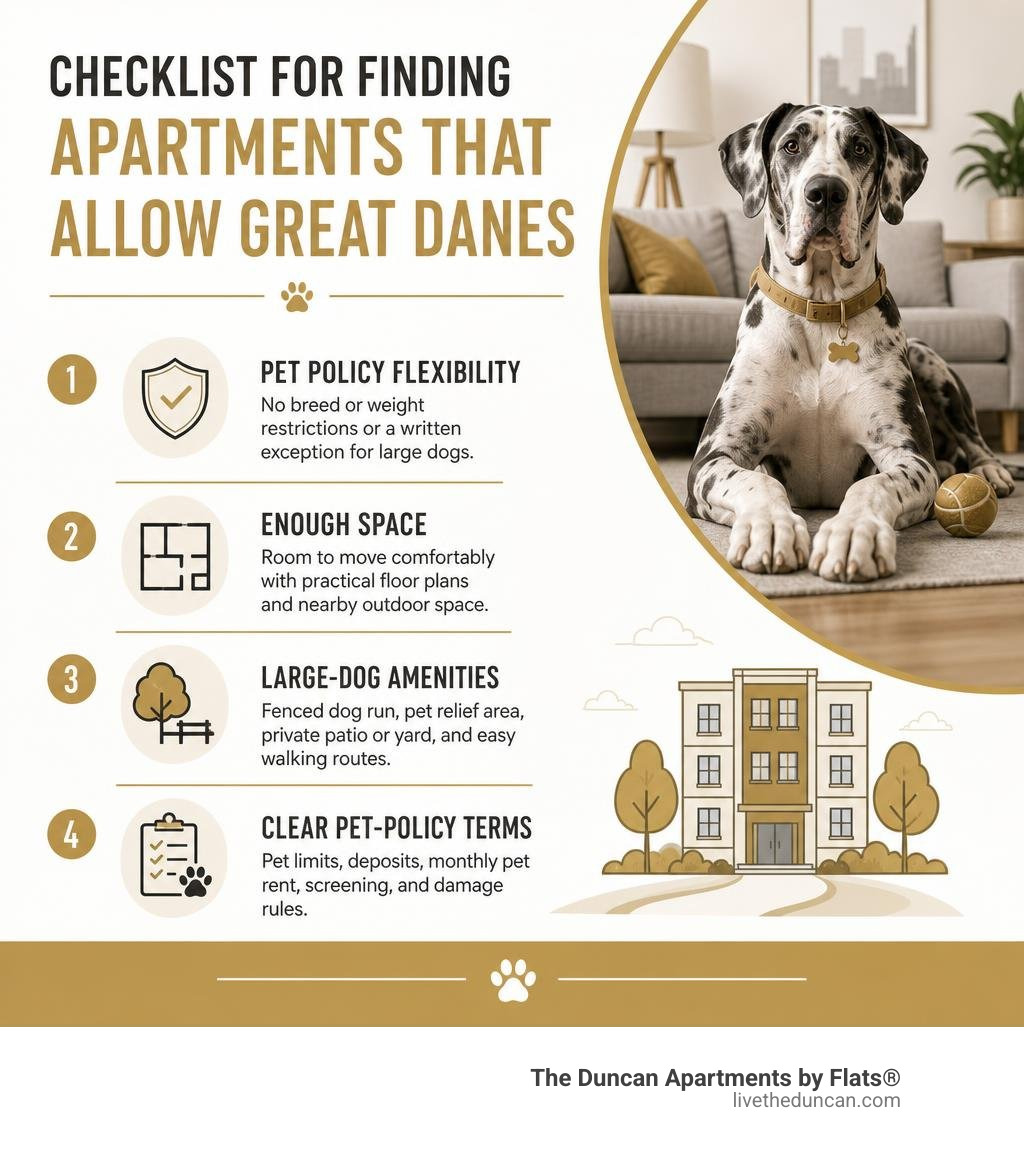
For a quick answer, focus on rentals that clearly state:
- Transparent pet criteria, including any weight limits, breed-related rules, pet screening steps, and exception processes.
- Functional apartment layouts, with enough room for daily routines, rest, feeding areas, and comfortable movement.
- Helpful pet amenities, such as a fenced dog run, pet relief area, private patio or yard, elevator access, and convenient walking routes.
- Clear lease terms covering pet limits, pet screening, cleaning expectations, and damage rules.
Understanding how apartment communities structure their pet policies helps every renter — whether they have a Great Dane, a mixed breed, or a smaller companion — find housing that fits their household. With dogs remaining a major part of U.S. household life, according to American Veterinary Medical Association pet ownership data, pet-inclusive housing policies matter for renters across many apartment searches.
Why Apartment Pet Policies Can Be Challenging to Navigate
Searching for apartments that allow Great Danes — or any dog that falls outside a community's standard pet criteria — often means reading pet policies in more detail than a standard apartment listing provides. Many communities welcome pets but still use weight limits, restricted breed lists, pet counts, or screening requirements that can affect whether a specific dog is approved.
Property managers often create pet policies to address building operations, insurance requirements, common-area maintenance, and neighbor experience across apartment communities. For any renter whose dog may fall outside a published guideline, the key is to identify communities that explain their pet criteria clearly and evaluate pet suitability through documented policies rather than vague listing language. Similar policy patterns may appear in houses for rent that allow big dogs, where renters also need to confirm pet terms before applying.
Understanding Weight Caps and Insurance Blacklists
A frequent hurdle is the standard weight limit. Many apartment communities set maximum pet weights between 25 and 50 pounds, which can exclude dogs of many breeds and mixes — including Great Danes. This means a listing can appear pet-friendly at first glance but still exclude a dog after the detailed pet addendum is reviewed.
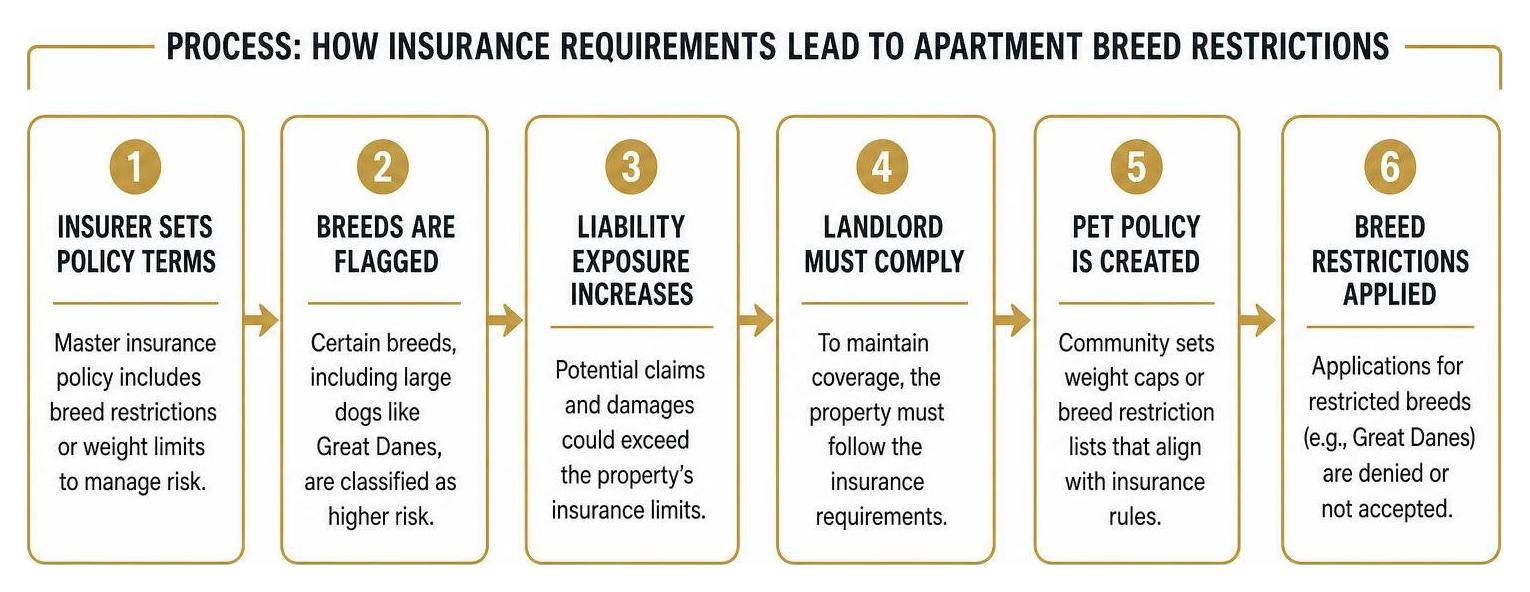
Insurance requirements can also influence pet policies. Some building insurance policies include restricted animal lists or liability conditions that limit a landlord's flexibility. Other communities use pet screening, vaccination records, behavioral history, and lease rules to manage pet-related concerns more individually. Reviewing broader apartment breed restrictions gives helpful context on how these rules can shape community pet agreements.
How to Find Pet-Friendly Apartments With Clear Pet Policies
Finding a home with a clear and workable pet policy is much easier when the search starts with details, not assumptions. Instead of relying only on a generic pet-friendly filter, renters should confirm the actual pet addendum, weight language, screening process, pet count, and amenity access before submitting an application.
Modern renters can use digital tools, community databases, and direct property management conversations to compare pet policies side by side. A comprehensive pet-friendly apartments guide 2026 can also help explain how apartment communities describe inclusive pet amenities and policy structures.
Essential Resources for Navigating Apartment Pet Policies
To streamline your search, start with resources that provide more than a simple "pets allowed" checkbox. The best search process confirms the exact policy language and then follows up directly with the leasing office.
Key tools and search tactics include:
- Apartment community websites: Review pet policy pages, amenity lists, lease addendum summaries, and resident guidelines before scheduling a tour.
- Pet-focused rental filters: Use platforms that show weight thresholds, animal screening requirements, and pet amenity details when available.
- Direct leasing outreach: Contact leasing offices to confirm whether the community reviews pets individually, requires records, limits household pet count, or uses a third-party pet profile service.
- Prepared documentation: Keep vaccination records, training records, renter insurance information, and previous landlord references ready so the leasing team can review the pet application efficiently.
Top Amenities to Look for in Pet-Friendly Apartments
When selecting an apartment, the right physical environment makes daily pet care more convenient. For renters with dogs of any size — including breeds like Great Danes — layout and access often matter as much as square footage.
Look for communities offering these high-value pet amenities:
- Elevator Access and Wide Corridors: Multi-story living is easier when elevator cabs and hallways provide practical room for daily walks in and out of the building.
- On-Site Pet Wash Stations: Dedicated grooming rooms with elevated tubs, wash stations, and dryers can make bathing a dog simpler without using a personal bathroom. Discover how these modern facilities function by reviewing apartments with pet wash features.
- Dedicated Outdoor Relief Zones: On-site pet relief areas with turf or natural grass provide convenient options for routine breaks.
- Private Outdoor Patios or Balconies: Ground-floor units with enclosed outdoor areas or upper-level apartments with secure balconies can add useful fresh-air space right outside the living room.
- Enclosed On-Site Dog Parks: On-site runs with double-gated entry and open turf give dogs a convenient place for supervised movement within community grounds.
Proven Strategies to Get Approved for Pet-Friendly Housing
When presenting an application to a leasing team, a proactive and organized approach can make the pet review process smoother. The goal is to show that the resident understands community rules and that the dog has a documented history of appropriate apartment living behavior.
By assembling a complete documentation package before touring, renters can help property managers evaluate the application efficiently. Clear communication also reduces confusion about pet limits, screening steps, and community expectations.
Key items to include in your renter application package:
- Comprehensive Pet Resume: Create a polished profile featuring clear photos, exact weight, age, spay or neuter verification, and up-to-date vaccination records from your veterinarian.
- Training Certifications: Include proof of completed obedience training, such as the American Kennel Club (AKC) Canine Good Citizen (CGC) certificate, which verifies leash manners and calm behavior around others.
- Previous Landlord References: Provide written references from prior property managers addressing house training, lease compliance, and any history related to property condition or resident concerns.
- Renter Insurance Liability Coverage: If available, provide a renter insurance declaration page that includes personal liability coverage and any pet-related liability terms.
Temperament Screening vs. Blanket Breed Bans
Some apartment communities use individual pet screening instead of relying only on weight limits or restricted breed lists. Individual screening may review vaccination records, behavioral history, training, pet profiles, and a brief pet interview.
Understanding how individual assessment differs from blanket restrictions can help renters ask better questions before applying:
| Assessment Method | Blanket Breed & Weight Restrictions | Individual Temperament Screening |
|---|---|---|
| Evaluation Basis | Based strictly on weight limits or breed lists | Based on documented behavior, records, and community criteria |
| Flexibility | Rigid rules with automatic application rejections | More detailed review for pets that meet the community's standards |
| Community Impact | Uses broad categories that may not reflect an individual pet | Encourages clear expectations for residents and pets |
| Landlord Assurance | Assumes risk based on category or size | Reviews pet information and owner control through a structured process |
| Renter Process | Application may be denied automatically if over the policy limit | Application may proceed through a pet profile, interview, or behavioral review |
Communities utilizing individual evaluations often conduct a brief in-person pet interview where leasing staff observe how a dog responds to a new environment, basic commands, and people. Renters should ask whether this process is available before applying, especially when a dog falls outside a published weight guideline.
Legal Protections and Pet Policy Fine Print
Understanding lease agreements and relevant housing rules is essential when renting with animals. Always review the full pet addendum carefully before signing a lease agreement, paying close attention to pet limits, screening requirements, vaccination rules, leash rules, common-area expectations, and cleaning responsibilities.
It is also important to understand federal standards governing assistance animals. Under the Fair Housing Act (FHA), qualified service animals and Emotional Support Animals (ESAs) are legally distinguished from standard pets. When a resident provides reliable documentation supporting a disability-related need for an assistance animal, housing providers must consider a reasonable accommodation request. This may include waiving standard pet weight limits and breed restrictions, provided the animal does not pose a direct health or safety threat and the request does not create an undue burden. Learn more about navigating pet policies in general by reviewing apartments that take large dogs.

Frequently Asked Questions About Apartment Pet Policies
Do Emotional Support Animal regulations allow dogs like Great Danes in breed-restricted apartments?
Under the federal Fair Housing Act, a verified Emotional Support Animal may be treated as an assistance animal rather than a pet. If a resident has reliable documentation from a licensed healthcare professional establishing a disability-related need, the housing provider must consider a reasonable accommodation request. If approved, standard pet rules such as weight caps and breed restrictions may not apply. The animal must still remain under control and must not pose a direct health or safety threat.
What documentation do communities typically require for pets?
In a standard pet-friendly apartment community, property managers often request up-to-date vaccination records, proof of spay or neuter status, and pet registration profiles. Some communities may also request training certificates or prior landlord references. Legally recognized service animals and approved assistance animals are processed through standard fair housing accommodation procedures.
How much space does a dog need in an apartment?
Many dogs — including breeds like Great Danes — are calm indoors and spend much of the day resting, but they still need a functional apartment layout. Look for space for a properly sized bed, food and water bowls, easy pathways through the home, and access to regular outdoor walks. Daily exercise, consistent routines, and a clear pet policy are often more important than simply choosing the largest floor plan available.
Conclusion
Navigating apartment pet policies effectively starts with understanding how communities structure their rules around weight limits, breed lists, screening, and lease terms. Whether searching for apartments that allow Great Danes or housing for any other dog, the most useful strategy is to review the full pet addendum, confirm any weight or breed-related rules, ask about individual screening, and prepare records that help the leasing team evaluate the pet application clearly.
In Chicago's West Loop, The Duncan Apartments by Flats® offers modern apartment living with spacious floor plans, luxury amenities, and convenient access to neighborhood dining, transit, and city attractions. For more local pet-policy guidance, read the complete pet friendly apartments chicago guide.


