


Key Differences: 'Pets Allowed' vs. Pet Friendly Apartments
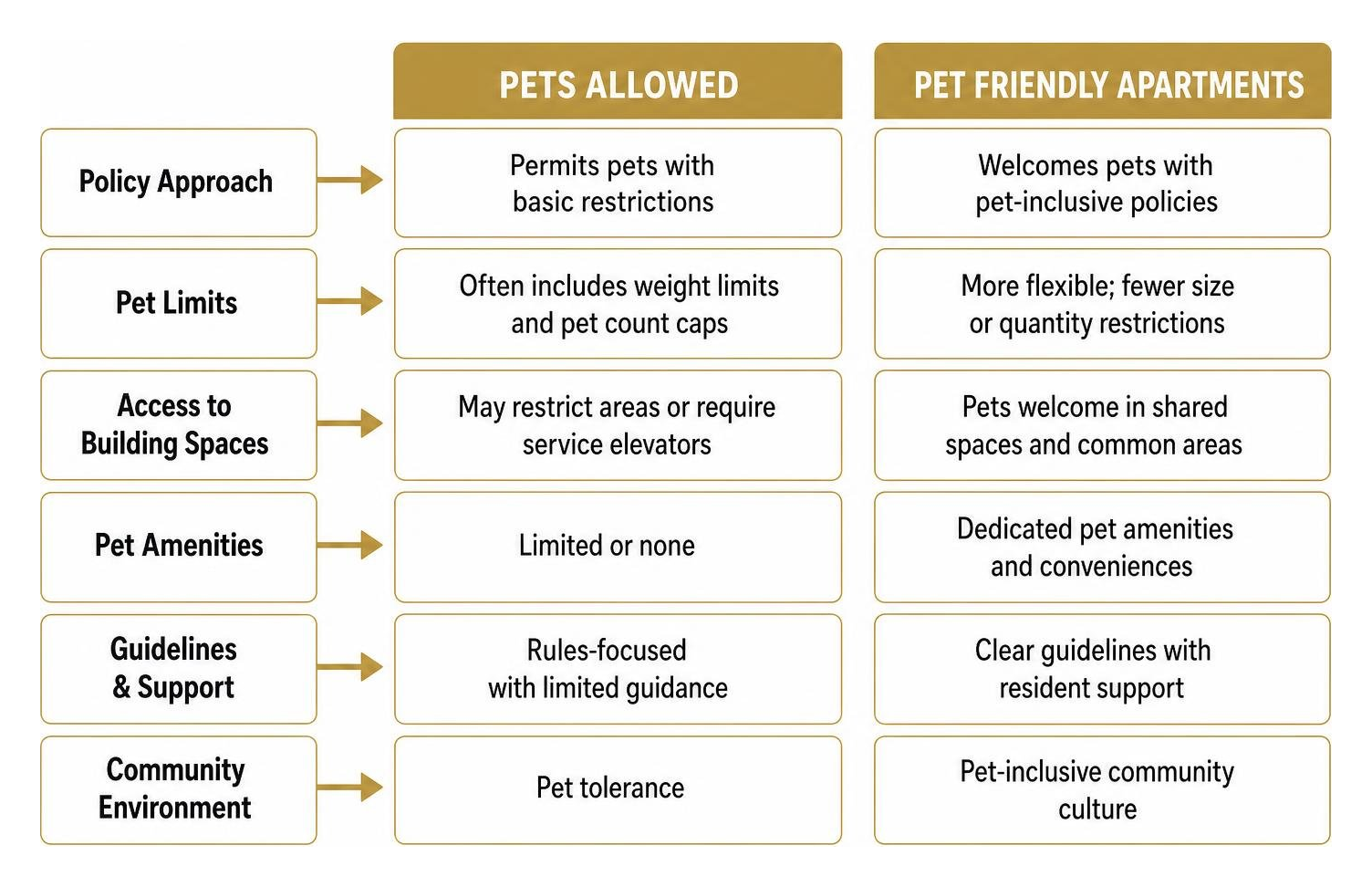
When browsing rental listings in Chicago, understanding the distinction between a building that allows pets and one that actively welcomes them is essential for finding a comfortable living space. While these terms are often used interchangeably in marketing materials, they represent two distinct approaches to property management, building architecture, and tenant experience.
Defining 'Pets Allowed' vs 'Pet Friendly'
A listing marked "pets allowed" generally indicates that the building owner permits animals on the property, but often subject to strict conditional restrictions. These properties may enforce tight weight limits, cap the total number of allowed animals per unit, or restrict access to shared building spaces. In some cases, pets may be required to use service elevators or avoid main lobby areas entirely, treating companion animals as an exception rather than an integrated part of the residential community.
Conversely, pet friendly apartments offer living environments specifically designed to integrate pets into daily community life. These communities provide dedicated resident amenities, clear housing guidelines, and welcoming policies that make daily routines seamless for owners and their animals. From intentional floor plan design to specialized on-site facilities, pet-friendly buildings elevate daily convenience. To better understand how building policies vary across different management styles, review the comprehensive Animal Friendly Apartments Guide 2026.
Evaluating these operational distinctions prior to signing a lease helps avoid unexpected inconveniences after move-in day. Pet-friendly properties frequently host community events, offer designated relief areas, and train staff to foster a welcoming environment for all residents.
Pet Occupancy and Weight Limits
Many residential properties establish clear limits on animal occupancy and size to maintain comfortable environments for all residents. Standard building guidelines usually cap occupancy at a maximum of two pets per apartment home, ensuring that living spaces remain well-proportioned for residents and their companion animals.
Weight thresholds vary across properties. Some developments set limits at 25 or 50 pounds, while others welcome pets without strict weight cutoffs. When evaluating floor plans, ensure that room dimensions and balcony layouts comfortably suit your animal's size and daily routine. Spacious living areas, durable flooring materials, and easy access to outdoor space are critical factors when selecting a home. For details on properties with flexible policies, see the guide on Apartments That Take Large Dogs.
Breed Restrictions, Pet Policies, and Legal Protections
Leasing an apartment with a companion animal involves navigating building guidelines, property rules, and legal definitions under federal and local housing legislation. Understanding these rules ensures transparency during the leasing process and helps renters prepare all required documentation in advance.
Navigating Breed Restrictions and Local Policy Guidelines
Many rental properties maintain specific breed guidelines dictated by management preferences or insurance policy conditions. Common restrictions may apply to certain working or guard breeds. Detailed policy breakdowns can be explored in the articles on Apartment Breed Restrictions and Apartments For Rent That Allow German Shepherds.
Policy structures for pet-inclusive housing typically combine registration procedures, community rules, and designated area guidelines. Property managers utilize these policies to maintain community upkeep, specialized cleaning services, and general maintenance of shared outdoor amenities.
| Policy Requirement | Frequency | Description | Documentation Status |
|---|---|---|---|
| Pet Registration | One-time at move-in | Official registration of the animal with property management | Required prior to occupancy |
| Vaccination Verification | Annual or as required | Up-to-date health and rabies immunization records | Required per local regulations |
| Pet Addendum | Signed at lease signing | Agreement outlining community rules and owner responsibilities | Required part of lease |
Service Animals vs. Emotional Support Animals vs. Pets
Federal legislation establishes clear distinctions between household pets and assistance animals, governing how property owners must accommodate residents with legal assistance animal status under guidelines established by the U.S. Department of Housing and Urban Development:
- Service Animals: Under the Americans with Disabilities Act (ADA), a service animal is specifically trained to perform tasks for an individual with a disability. Service animals are permitted in all public and residential spaces, and landlords cannot apply standard pet restrictions or administrative limitations.
- Emotional Support Animals (ESAs): Protected under the federal Fair Housing Act (FHA), ESAs provide emotional support that alleviates identified symptoms of a disability. While not required to have task-specific training, valid documentation from a licensed healthcare professional is required. Properties must grant reasonable accommodations without applying standard breed or weight limits.
- Household Pets: Domesticated animals kept for companionship. Subject to standard building rules, lease addendums, and community guidelines.
Top Pet Amenities and Building Features
Modern residential developments increasingly incorporate pet-focused infrastructure to streamline care and exercise for resident animals, creating living environments where pet care fits effortlessly into daily schedules.

Unrestricted Options and No Breed Limit Pet Friendly Apartments
Communities designed specifically with pet care in mind often feature specialized amenities directly within the property footprint. Key facilities to look for during apartment tours include:
- On-Site Dog Parks: Enclosed off-leash play areas featuring specialized turf, double-gated safety entries, agility equipment, and shaded seating areas for residents.
- Indoor Pet Spas: Designated grooming stations equipped with elevated washing basins, professional spray nozzles, warm-air commercial dryers, and complimentary grooming supplies. Explore options featuring these spaces via the roundup of Apartments With Pet Wash.
- In-Unit Balconies & Outdoor Terraces: Private outdoor spaces that offer fresh air and comfortable outdoor relaxation for animals during the day.
- Waste Stations & Relief Turf: Strategically placed waste stations with bags and trash receptacles located near property exits and outdoor relief areas.
Comparing New Developments with Older Buildings
Newly constructed residential developments frequently feature integrated pet amenities into their initial architectural design. Features like indoor grooming lounges, keyless smart locks for seamless dog-walking services, and direct access to outdoor relief turf are increasingly standard in contemporary communities.
Conversely, older historic buildings may offer generous interior square footage, high ceilings, and proximity to neighborhood green spaces, though specialized on-site grooming facilities may be more limited. Evaluating these tradeoffs helps prospective renters select the right setting based on their lifestyle and daily routines.
Strategies for High-Demand Markets and Lease Negotiation
Securing a rental unit in dense urban markets requires preparation, organized documentation, and a clear understanding of neighborhood options. Taking proactive steps can simplify the search process and position your application favorably with leasing teams.
Finding Pet Friendly Apartments in Competitive Urban Markets
In active rental markets like Chicago, pet-friendly listings can fill quickly due to high demand for modern apartment units. Successful searches rely on using targeted search filters, monitoring listings daily, working with local leasing agents, and preparing documentation well in advance. Utilizing specialized search resources, such as the Pet Friendly Apartments Chicago Guide and curated listings of Chicago Pet Friendly Rentals, streamlines the search process significantly by focusing exclusively on verified pet-inclusive communities.
How to Negotiate Pet Policies and Prepare Application Resumes
Creating a comprehensive pet resume helps establish your reliability as a responsible pet owner during the application process. Providing complete medical records and behavioral verification demonstrates thorough care and respect for property upkeep. An effective pet resume includes:
- Animal Details: Name, age, breed, weight, microchip number, and spay/neuter verification.
- Medical History: Up-to-date vaccination records, rabies certificate, and local municipal licensing verification.
- Training & Behavior: Certificates from recognized obedience training programs, canine good citizen credentials, or behavioral evaluations.
- References: Written recommendations from previous landlords, property managers, or veterinarians confirming proper care, responsible tenancy, and quiet conduct in past residences.
Frequently Asked Questions about Pet-Friendly Rentals
What documentation is required when moving into a pet-friendly apartment?
Requirements typically include updated vaccination records, municipal licensing verification, and a signed pet addendum alongside the standard lease agreement. Additional details like spay/neuter verification or behavioral references may also be requested prior to move-in.
What is the difference between an emotional support animal and a pet?
Emotional support animals are assistance animals recognized under federal Fair Housing Act regulations when prescribed by a licensed healthcare professional to alleviate symptoms of a disability. Unlike standard household pets, assistance animals are legally exempt from building weight caps and breed restrictions.
Can apartment complexes restrict specific dog breeds?
Yes. Rental properties may maintain specific breed restrictions based on management guidelines, building policies, or commercial insurance coverage terms, provided the restrictions comply with applicable federal, state, and local housing regulations. Service animals and emotional support animals are exempt from standard breed restriction policies.
Conclusion
Finding the right home for you and your companion animal comes down to reading lease agreements carefully, evaluating building amenities, and preparing your application materials in advance. Modern developments such as The Duncan in Chicago's West Loop offer pet-friendly floor plans alongside premier amenities including an indoor pool and rooftop lounge, providing ideal environments for urban living. Explore available layouts and neighborhood features today through the comprehensive Pet Friendly Apartments Chicago Guide.


